

How to Catch Doormat Fluke
Learn how to catch doormat fluke with proven Northeast tactics including drift speed, structure fishing, bait selection, bucktail techniques, and the best fluke rigs for trophy summer flounder.
How to Catch Doormat Fluke: Big Summer Flounder Tips for the Northeast
Learning how to catch doormat fluke is different from regular fluke fishing. Big summer flounder do not always sit with the shorts, they do not always chase small bait, and they usually hold tight to structure, channel edges, wrecks, reefs, and bait-rich current seams. If you want to target trophy fluke in the Northeast, you need the right drift speed, bigger bait, stronger rigs, and a presentation that stays in the strike zone longer.
This guide breaks down the exact doormat fluke tactics Northeast anglers use from New Jersey and Long Island to Montauk: where big fluke hold, the best tides, the best bait for big summer flounder, when to use a bucktail rig versus a hi-lo rig, and which Asalt Fishing fluke rigs match each condition.
What Is a Doormat Fluke?
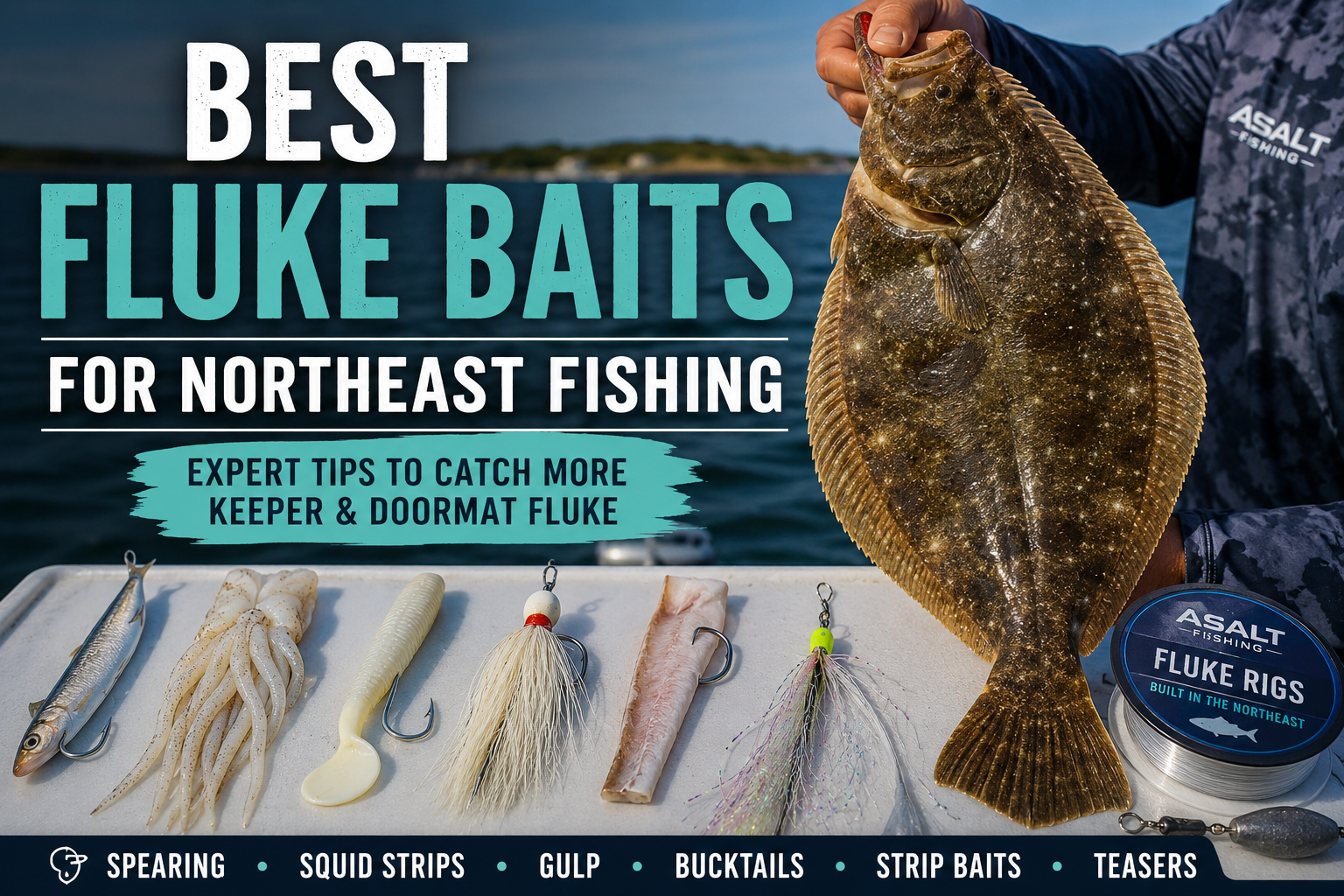
A doormat fluke is a large summer flounder that is big enough to look like a welcome mat when laid flat. Most Northeast anglers consider a true doormat fluke to be around 26 inches or larger, often weighing 5 pounds or more. These are usually older female fish, and they behave differently from smaller fluke.
Shorts and average keepers often spread out across sandy bottom and chase smaller bait. Doormat fluke are more selective. They use structure, depth changes, current seams, and bait funnels to ambush larger meals while conserving energy.
Where to Find Big Doormat Fluke
The biggest mistake anglers make when targeting doormat fluke is drifting over random open bottom. Big fluke are usually found around structure or transitions. Look for places where bait gets pushed by tide and current.
Wrecks and Reefs
Wrecks, artificial reefs, rock piles, and hard-bottom patches are prime doormat fluke spots. Big summer flounder often sit down-current of the structure where baitfish, squid, spearing, sand eels, and crabs get swept past them.
Channel Edges
Channel edges are one of the best places to catch big fluke in bays and inlets. A drop from shallow water into deeper water creates an ambush lane. Fluke sit along the slope and wait for bait to wash over the edge.
Inlets and Current Seams
Inlets can produce trophy fluke when bait is moving through with the tide. The key is not just fishing the inlet, but finding the current seam, pocket, or bottom change where big fish can hold without fighting the full flow.
Sand Ridges and Offshore Lumps
In the ocean, doormat fluke often stage on sand ridges, lumps, and subtle bottom changes. Even a small depth change can concentrate bait and create a feeding lane for larger summer flounder.
Best Time to Catch Doormat Fluke
The best time to catch doormat fluke in the Northeast is usually early season and late season. In May and June, larger fluke move into bays, inlets, and nearshore waters to feed. In September and early fall, big fish feed heavily before moving offshore.
Summer can still produce doormats, but many of the larger fish slide deeper as water temperatures rise. During July and August, focus on deeper channels, ocean structure, reefs, and nearshore wrecks.
Best Tide for Doormat Fluke
Fluke are current-driven ambush feeders. The best tide is usually the first half of moving water, either incoming or outgoing. Slack tide is usually the weakest part of the bite because bait stops moving and fluke become less aggressive.
For doormat fluke, pay close attention to the first two hours after the tide starts moving. That is when bait begins flowing again, but the drift is often still slow enough to keep your bait in the strike zone.
Best Drift Speed for Big Fluke
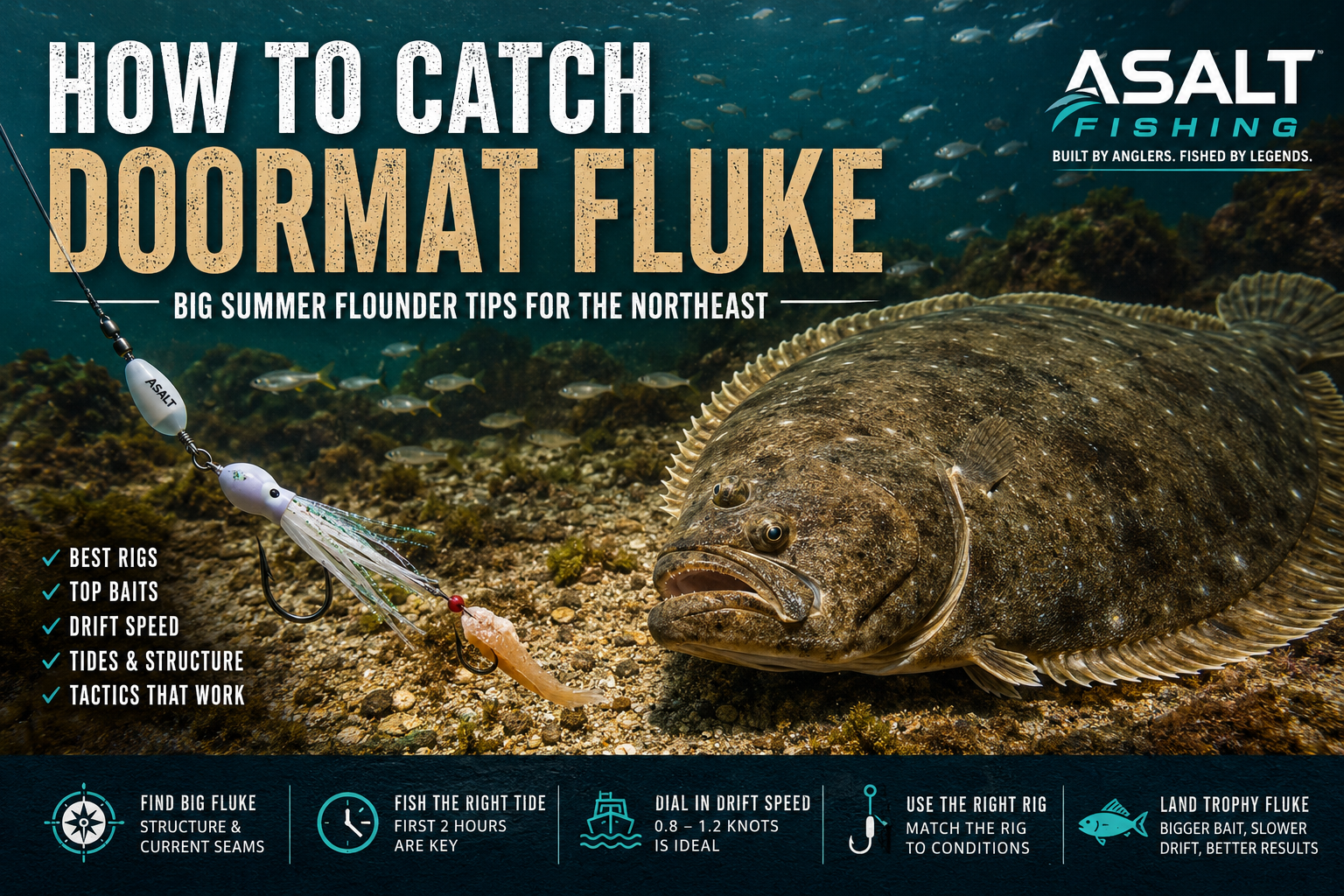
The ideal drift speed for fluke is usually between 0.8 and 1.5 knots. For doormat fluke, the lower end of that range is often better. Big fish do not always want to chase a fast-moving bait. A slower drift gives them time to track, follow, and fully commit.
- Under 0.6 knots: Too slow. Bait may drag or look dead.
- 0.8 to 1.2 knots: Excellent doormat fluke speed.
- 1.2 to 1.5 knots: Good general fluke speed.
- Over 1.8 knots: Often too fast unless you increase weight or slow the boat.
Keep your rig close to bottom without dragging unnaturally. If your line angle is too steep behind the boat, increase sinker weight or use a drift sock. If your line is straight down and dead, you may need more movement.
Best Rigs for Doormat Fluke
The best rig for big fluke depends on depth, bait, current, and bottom type. The goal is simple: keep your bait near bottom, add enough flash or movement to get noticed, and use a hook setup strong enough for a trophy fish.
1. Fluke Floating Drift Rig
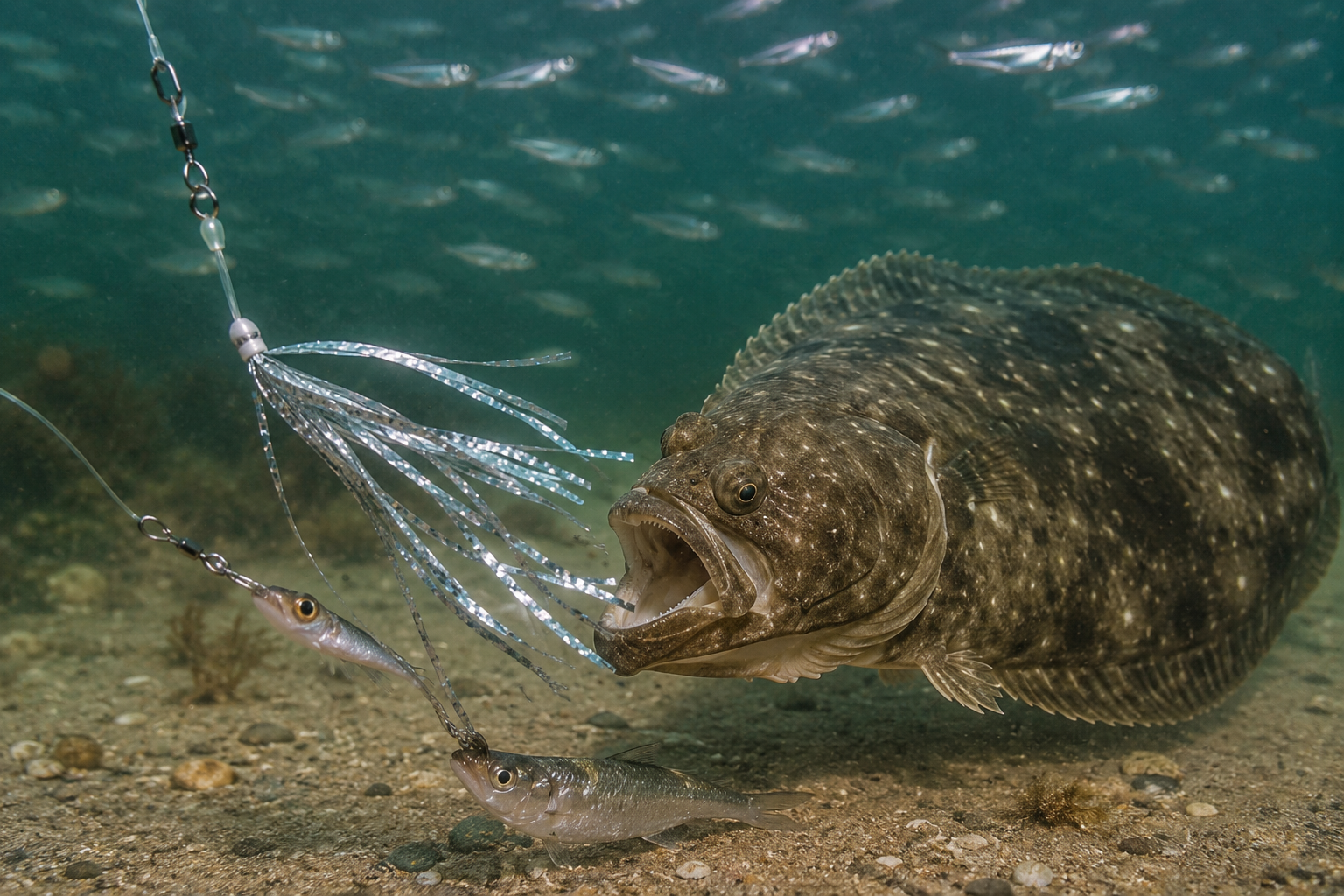
The Fluke Floating Drift Rig is one of the best choices when you want to keep bait slightly lifted off bottom. This is especially useful around structure, sticky bottom, and areas where big fluke are sitting just above the sand waiting to ambush bait.
2. Fluke Hi-Lo Double Bucktail Teaser Rig
The Fluke Hi-Lo Double Bucktail Teaser Rig is a strong all-around choice for Northeast fluke fishing. It lets you fish two bait presentations at once, such as squid on one hook and spearing, killie, or Gulp on the other.
3. Fluke Hi-Lo Gulp Rig
When fish are keyed in on scented soft plastics, the Fluke Hi-Lo Gulp Rig is the better choice. This rig is built for fishing Gulp naturally while keeping the bait in the strike zone.
4. Mylar Flash Fluke Rigs
When spearing, rain bait, bay anchovies, or small baitfish are present, flash can make a major difference. Mylar gives off baitfish-style reflection that helps fluke locate the rig in moving water. For more detail, read our guide to Fluke Mylar Flash Rigs.
Shop the full Asalt Fishing Fluke Rigs Collection for Northeast-tested drift rigs, hi-lo rigs, bucktail teaser rigs, floating rigs, Gulp rigs, and Mylar flash rigs.
Bucktail Rig vs Hi-Lo Rig for Doormat Fluke
A bucktail rig is best when you want to actively work the bottom and trigger reaction strikes. It is especially effective around structure, wrecks, reefs, and channel edges. The lift-and-drop action can make a big fluke react when a dead-drifted bait does not.
A hi-lo rig is better when you want to cover two bait zones at once. It also lets you test different baits on the same drift. For example, you can fish a squid strip on one hook and Gulp, spearing, or a killie on the other.
For serious doormat fluke fishing, carry both. Use bucktail-style rigs when fish are active or holding tight to structure. Use hi-lo rigs when you want a natural bait presentation and more scent in the water.
Best Bait for Doormat Fluke
Big fluke eat bigger meals. Do not target trophy summer flounder with tiny bait. Use larger strips, larger profiles, and baits that match what is naturally moving through the area.
Live Killies
Live killies are one of the best baits for big fluke. They stay active, kick naturally, and trigger larger summer flounder to strike.
Squid Strips
Squid is a classic fluke bait because it adds scent, movement, and durability. For doormat fluke, use longer tapered strips that flutter in the current.
Spearing
Spearing works extremely well when small baitfish are present. Pair spearing with flash, bucktail, or Mylar for a more visible presentation.
Gulp
Gulp works because it adds scent and action. White, pink, chartreuse, and natural baitfish colors are all proven options for summer flounder.
Fluke Belly
Fresh fluke belly strips are a favorite among serious fluke anglers. They are tough, natural, and flutter well in the current.
How to Fish Structure for Big Fluke
When fishing wrecks, reefs, or rough bottom, do not simply drift over the top of the structure. Big fluke often sit on the down-current side where bait gets pushed off the structure and becomes vulnerable.
Set up your drift so your rig reaches bottom before it enters the strike zone. Mark every bite on your GPS. If you catch one quality fish, repeat the same drift line. Big fluke often hold in very specific lanes.
Common Mistakes That Cost You Big Fluke
- Setting the hook too fast: Big fluke often grab the bait before fully eating it. Let them load the rod before sweeping.
- Using bait that is too small: Doormat fluke want a meal worth chasing.
- Fishing too fast: If your drift is too fast, your rig may plane above the strike zone.
- Ignoring structure: Big fluke are usually not spread across dead, flat bottom.
- Not changing sinker weight: Adjust weight as tide and drift speed change.
- Fishing slack tide too long: Use slack water to reset, move, or prepare for the next tide.
Recommended Doormat Fluke Setup
- Rod: 7-foot medium-heavy spinning or conventional rod with a sensitive tip
- Reel: 4000 to 5000 size spinning reel or light conventional reel
- Main Line: 20 to 30 lb braid
- Leader: 25 to 40 lb fluorocarbon
- Sinker: 2 to 8 oz depending on depth and drift speed
- Rig: Floating drift rig, hi-lo bucktail rig, Gulp rig, or Mylar flash rig
- Bait: Squid strip, spearing, killie, Gulp, or fluke belly
Doormat Fluke FAQ
What is considered a doormat fluke?
A doormat fluke is generally a summer flounder over 26 inches and around 5 pounds or larger. Many Northeast anglers use the term for trophy-class fluke that are wide, heavy, and much larger than a normal keeper.
What is the best bait for doormat fluke?
The best bait for doormat fluke is usually a large killie, squid strip, spearing, Gulp, or fluke belly strip. Bigger bait usually works better when targeting trophy summer flounder.
What is the best rig for big fluke?
The best rig depends on conditions. A Fluke Floating Drift Rig is great for keeping bait lifted off bottom, while a Fluke Hi-Lo Double Bucktail Teaser Rig is better when you want two bait presentations at once.
What tide is best for fluke fishing?
The best tide for fluke fishing is moving water. The first two hours of incoming or outgoing tide are often the most productive. Slack tide is usually slower because bait movement stops.
What drift speed is best for doormat fluke?
The best drift speed for doormat fluke is usually between 0.8 and 1.2 knots. This keeps the bait moving naturally while giving larger fish enough time to commit.
What size bucktail should I use for doormat fluke?
Most Northeast anglers use bucktails from 1 to 4 oz depending on depth, tide, and drift speed. Use the lightest bucktail that still holds bottom.
Final Thoughts: Big Fluke Are Not Random
Doormat fluke are not caught by accident as often as people think. The biggest summer flounder are usually holding on structure, feeding around tide movement, and waiting for the right bait to come through the strike zone.
To catch more big fluke, focus on structure, slow your drift, use larger bait, and fish rigs built for Northeast conditions. Browse the full Asalt Fishing Fluke Rigs Collection before your next trip and match your rig to the water you are fishing.
After you land that doormat, check out our Recipes by Species section for fluke recipes and other Northeast seafood ideas.