

How to Catch Blowfish (Puffer Fish) – Best Rigs, Bait & Tips
Learn how to catch blowfish with the best rigs, bait, and techniques. Simple, effective tips for puffer fish fishing in bays and inshore waters.
Asalt Fishing · Saltwater Guide Series
How to Catch Blowfish:
The Complete Fishing Guide
Rigs, bait, seasons, and the secrets behind one of the Northeast's most rewarding — and most underrated — bottom fish.
If you've spent any time fishing the bays and inlets of the Northeast coast, you've probably felt a rapid, aggressive tap-tap-tap on the end of your line — only to pull up a round, spiny little creature that looks more like a cartoon than a catch. That's a blowfish, and if you've been tossing them back, you've been leaving a lot of table fare in the water.
Blowfish fishing (also called northern puffer fishing) is wildly fun, surprisingly underrated, and — when done right with the proper rig — incredibly productive. In this guide, we'll break down everything you need to know: where to find them, when they show up, what to feed them, and exactly how to set up your rig to maximize every cast.
1. What Are Blowfish?
The blowfish most anglers encounter along the Atlantic coast is the Northern Puffer (Sphoeroides maculatus). They range from Florida to Canada but are most abundant between New Jersey and Long Island, particularly in back bays, tidal flats, and shallow nearshore zones. They earn their name from their iconic defense mechanism: when threatened, they inflate their bodies with water, puffing up into a spiky, round ball that predators can't easily swallow.
Blowfish are bottom-feeders with strong, beak-like teeth designed to crush crabs, clams, worms, and other hard-shelled invertebrates. Their mouths are small, which means small hooks and small baits are essential to getting them on the line consistently.
| Attribute | Detail |
|---|---|
| Common Name | Blowfish, Northern Puffer, Puffer Fish |
| Scientific Name | Sphoeroides maculatus |
| Typical Size | 6–12 inches; up to 14 inches |
| Habitat | Sandy/muddy bottoms, back bays, inlets, shallow saltwater flats |
| Prime Season | Late May through October (peak: July–September) |
| Range | Atlantic coast, most abundant from NJ to Long Island, NY |
2. Why Target Blowfish?
Blowfish might not get the glamour of striped bass or fluke, but here's why dedicated anglers return to them season after season:
They're aggressive biters. Blowfish are not shy. When they're around, they'll hit your bait quickly and repeatedly. A productive spot can have you double-hooking every other cast, making for non-stop action — especially when fishing with a hi-lo rig that presents two hooks simultaneously.
They're delicious. Blowfish tails — the meat behind the skin — are tender, mild, and sweet. Often called "sea squab," they're a prized delicacy that rivals flounder for table quality. Many old-school Northeast anglers consider a bucket of blowfish tails the highlight of summer.
They're accessible. You don't need a big boat or expensive gear. Blowfish congregate in back bays, off piers, and in shallow tidal flats that are easily reached by kayak, small boat, or even on foot from a jetty or beach.
"When the blowfish are biting, there's nothing more fun on light tackle — two at a time, every cast, all day long."
3. When & Where to Find Blowfish
Season & Timing
Blowfish are a warm-water species. They begin showing up in the bays and inlets of the Northeast around late May or early June, once water temperatures climb toward 60°F. The bite peaks from July through September, when the fish are most active and concentrated. By October, they begin moving offshore as waters cool, and they're largely gone by November.
For timing within a day, blowfish tend to feed most actively during moving tides — both the incoming and outgoing flow. Slack tide can slow the bite, so plan your outings around tidal movement for best results.
Where to Look
Blowfish thrive on sandy and muddy bottoms where they can forage for invertebrates. Prime locations include:
Back bays and tidal creeks — Protected, shallow water with good bait populations. Long Island's Great South Bay and Peconic Bay are legendary blowfish grounds.
Near mussel beds and hard structure — Blowfish follow food. Anywhere mussels, crabs, and worms concentrate, so will the fish.
Inlets and channels — Moving water concentrates baitfish and draws puffers in to feed.
Sandy flats in 5–20 feet of water — The classic blowfish depth range for most of the season.
4. Best Rigs for Blowfish Fishing
Rig selection is where most anglers leave fish in the water. Because blowfish are bottom-feeders with small mouths, you need a presentation that keeps your bait on or very near the bottom, with hooks small enough for them to take cleanly.
The Hi-Lo Rig: The Gold Standard
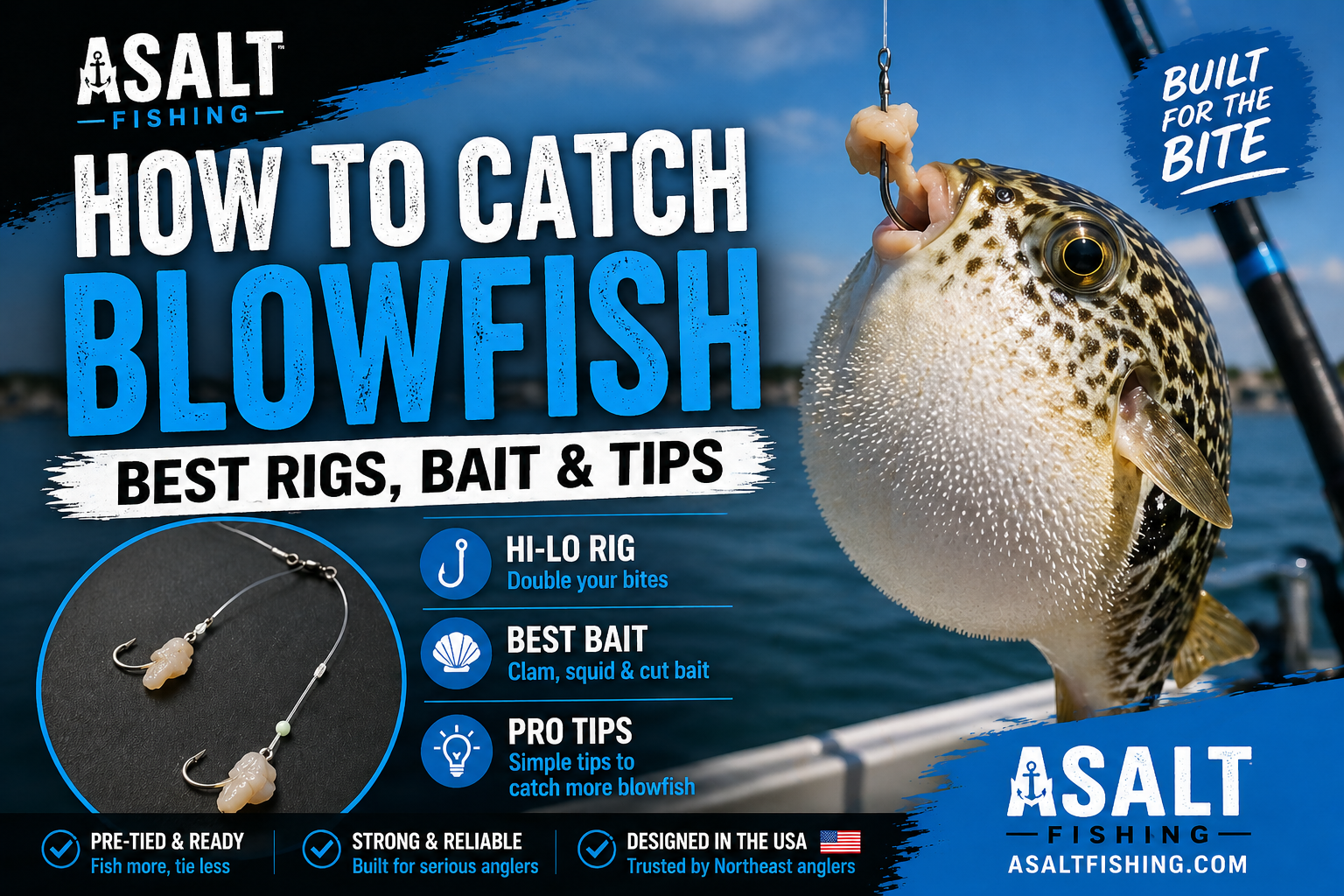
The most effective and popular setup for blowfish is the hi-lo bottom rig — also called a high-low rig or two-hook bottom rig. This rig presents two baited hooks at different heights above the sinker, both close to the bottom where blowfish feed. The advantages are clear: two hooks mean two chances at a strike on every drop, and when blowfish are schooled up, double-headers become routine.
The Asalt Fishing Blowfish Hi-Lo Rig is purpose-built for this fishery. It's pre-tied with the right hook spacing, correct line weight for bay and nearshore use, and hook sizing specifically optimized for blowfish mouths. Instead of tying your own rigs dockside, this ready-to-fish setup lets you focus on finding fish, not fighting knots.
✦ Rig Setup Tips
- Hook size: Size 4 to 1/0 for blowfish. Their mouths are small — go smaller than you think.
- Sinker weight: Match the current. 1–2 oz in calm bays; up to 3–4 oz in faster-moving inlets.
- Leader length: Short dropper loops (4–8 inches) keep bait tight to the bottom and reduce tangles.
- Line: 10–15 lb monofilament or fluorocarbon leader on a hi-lo rig works perfectly for bay fishing.
- Attach to main line: Use a simple swivel at the top of your hi-lo rig to prevent line twist.
Other Effective Rigs
While the hi-lo bottom rig is the go-to, a simple single-hook bottom rig with a fishfinder slider can also produce when fish are scattered. Some anglers also use a double dropper loop rig tied with shorter loops to minimize snags in eelgrass. That said, for sheer efficiency and hook-up rates, the hi-lo pre-tied rig outperforms them all when the fish are concentrated.
5. Best Baits for Blowfish
Blowfish are opportunistic bottom-feeders, but they have clear preferences. Match what they're naturally eating in the area and you'll consistently outfish anglers using generic bait.
Squid — The #1 Blowfish Bait
Fresh or thawed squid is the most reliable and widely available blowfish bait. Cut it into thin strips about 1–2 inches long and thread it tightly onto the hook so it stays put despite the blowfish's nibbling attack style. Blowfish will bite the bait off the hook repeatedly before you hook them — keep strips small and tightly mounted.
Bloodworms & Sandworms
Live or fresh bloodworms and sandworms are deadly blowfish bait, particularly early in the season. They're natural forage that blowfish root for in sandy bottoms. The downside: worms are expensive, fragile, and blowfish will steal them fast. Hook small pieces through the head for the best hold.
Clam
Chunks of fresh or frozen clam (especially surf clam belly) are effective and economical. Clam holds well on the hook and releases scent that draws blowfish in from a distance. It's a great option when worms aren't available.
Shrimp
Fresh or frozen shrimp, cut into small pieces, rounds out the top blowfish baits. It's widely available, inexpensive, and stays on the hook better than worms. A small piece of shrimp tipped on the hook after a worm or squid strip can add extra attraction.
| Bait | Effectiveness | Hook-Up Rate | Notes |
|---|---|---|---|
| Squid strips | ★★★★★ | High | Best all-around; stays on hook well |
| Bloodworm | ★★★★★ | High | Top early-season bait; pricey |
| Clam | ★★★★☆ | Medium | Good scent; economical |
| Sandworm | ★★★★☆ | Medium | Natural forage; blowfish steal it fast |
| Fresh shrimp | ★★★☆☆ | Medium | Widely available; good backup bait |
6. Technique & Tips for More Blowfish
Feel the Bite
Blowfish are notorious bait-stealers. They peck at bait with quick, nibbling bites rather than engulfing it. On the rod, this feels like a rapid series of light taps. Resist the urge to set the hook on the first tap — wait until you feel the rod load up or the taps become more aggressive, then sweep the rod upward. Using a medium-light rod with a sensitive tip makes detecting bites and timing the hookset much easier.
Keep Bait Small & Fresh
Overly large baits are counterproductive with blowfish. Their small mouths mean they often can't get a hook-up on large chunks. Use thumbnail-sized pieces and re-bait frequently — blowfish will strip a hook clean in seconds if given the chance.
Anchor and Chum
When you mark fish or find a productive area, anchor up rather than drifting. Blowfish tend to school together, and staying on the school is more productive than covering water. Some anglers lightly chum with crushed clam shells or small pieces of bait to draw fish up under the boat.
Use Light Tackle
Blowfish aren't large fish, but on light tackle they're genuinely fun to catch. A 6–7 ft light or medium-light spinning rod with 10–15 lb line is ideal. It gives you the sensitivity to feel the bite and enough fun on the retrieve to make every fish count.
✦ Pro Tips for a Better Blowfish Day
- Fish during moving tides — blowfish are most active when water is flowing.
- Look for sandy bottom in 8–15 feet of water for consistent mid-season action.
- Use a fish finder if you have one — blowfish often show up as dense clouds just off the bottom.
- Keep re-baiting — blowfish are relentless bait-stealers and a bare hook catches nothing.
- Pre-tied hi-lo rigs like the Asalt Fishing Blowfish Hi-Lo Rig save time and put more fish in the cooler.
- Carry a towel — handling inflated puffers safely means not getting pricked by their spines.
7. Are Blowfish Good to Eat?
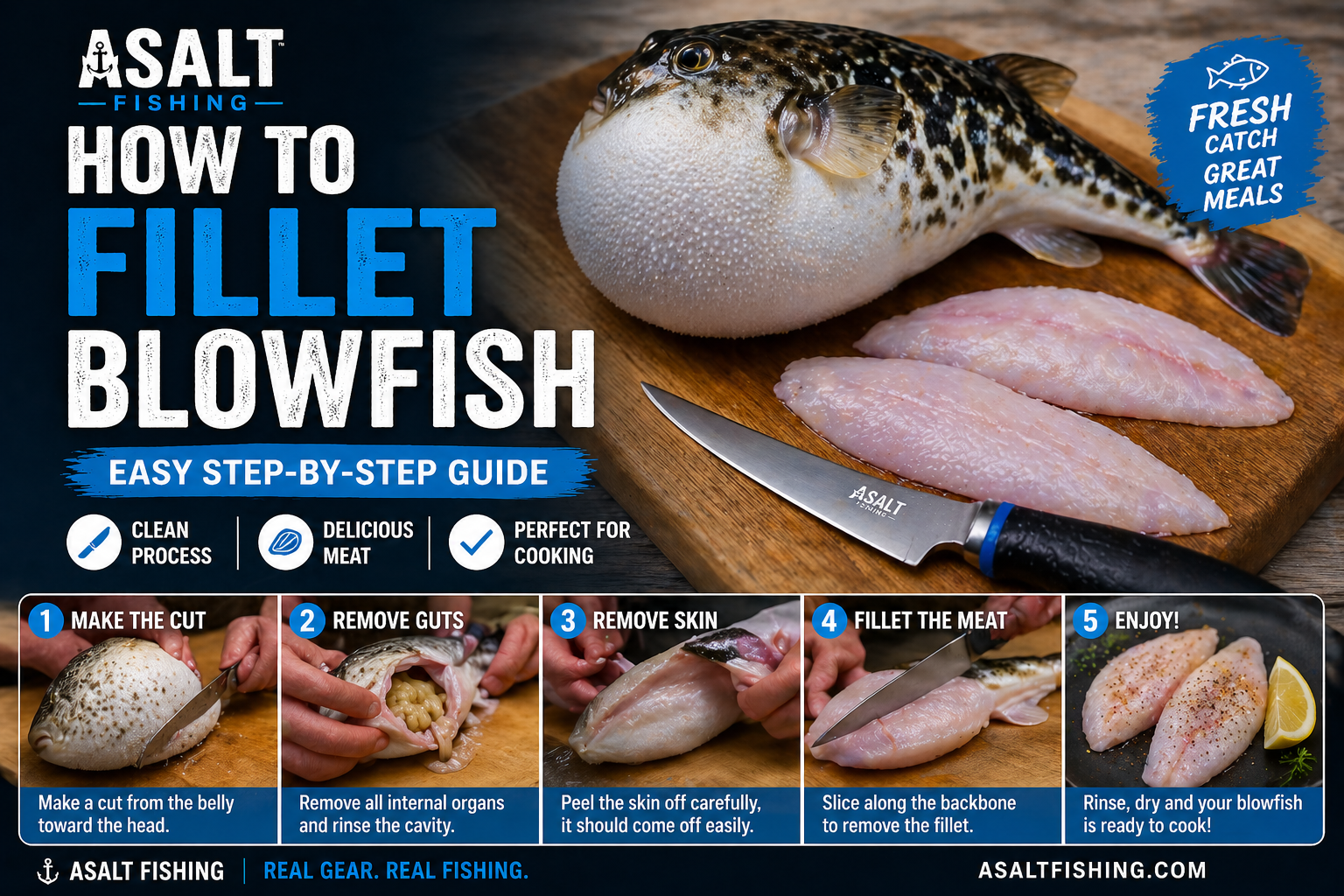
Short answer: yes — and many saltwater anglers consider them among the finest eating fish in the Northeast. The edible portion of a blowfish is the tail section, which contains a single strip of firm, white, mild-flavored meat. Once cleaned, these "sea squab" tails can be fried, baked, or sautéed with butter and garlic for a meal that rivals any seafood restaurant's offerings.
Important note: Only the muscle tissue of the Northern Puffer is safe to eat. The skin, organs, and some internal parts of puffer species can contain toxins. Stick to the tail meat, clean your fish properly, and you'll enjoy one of the sea's best-kept culinary secrets. When in doubt, consult local fishing regulations and handling guidelines.
Many anglers find that a good blowfish day means cleaning 30–50+ fish before heading home, which sounds like a lot of work — until the first plate of fried sea squab hits the table.
8. Frequently Asked Questions
What is the best rig for blowfish fishing?
The hi-lo bottom rig is widely considered the most effective blowfish rig. It presents two hooks at different heights above the sinker, right where blowfish feed. The Asalt Fishing Blowfish Hi-Lo Rig is purpose-built for this fishery with the correct hook sizes and line weight for Northeast bay fishing.
What time of year is best for blowfish fishing?
Blowfish are most active from late May through early October along the Northeast coast, with the peak bite running from July through September when water temperatures are warmest and fish are most concentrated.
What is the best bait for blowfish?
Squid strips are the most reliable and versatile blowfish bait. Bloodworms and sandworms are top alternatives, especially early in the season. Clam and shrimp also work well and are more budget-friendly options.
Are blowfish safe to eat?
The tail meat of Northern Puffer (blowfish) is completely safe and delicious. Only eat the muscle tissue from the tail — avoid the skin, organs, and internal parts. Always handle fish according to local guidelines.
Where is the best place to fish for blowfish in the Northeast?
Long Island's Great South Bay, Peconic Bay, and the back bays of New Jersey are among the most productive blowfish fisheries on the East Coast. Look for sandy or muddy bottom in 5–20 feet of water near tidal flow.
What hook size should I use for blowfish?
Blowfish have small mouths, so smaller hooks are more effective. Size 4 through 1/0 hooks work best. Using a larger hook leads to missed strikes and stolen bait.
1 comment
Chicken of the sea