


How to Catch Striped Bass: Seasonal Migration Explained
Striped bass follow a predictable 2,000-mile annual migration driven by water temperature and baitfish movement. Learn exactly when and where they show up each season — from spring Chesapeake spawns to fall blitzes on the...
How to Catch Striped Bass: Seasonal Migration Patterns Explained
Striped bass don't just show up — they follow a predictable annual highway. Anglers who understand the route catch more fish, every season.
Why Migration Patterns Matter More Than Gear
Striped bass are one of the most sought-after gamefish on the East Coast — and one of the most misunderstood. Anglers spend hundreds of dollars on rods, lures, and tackle, then show up at the wrong place at the wrong time and wonder why they're not catching fish.
The truth is simple: striped bass follow a highly predictable annual migration driven by water temperature, baitfish movement, and spawning instinct. Learn the pattern, and you'll know where the fish are before you ever leave the dock.
The Striper Migration Route: A 2,000-Mile Round Trip
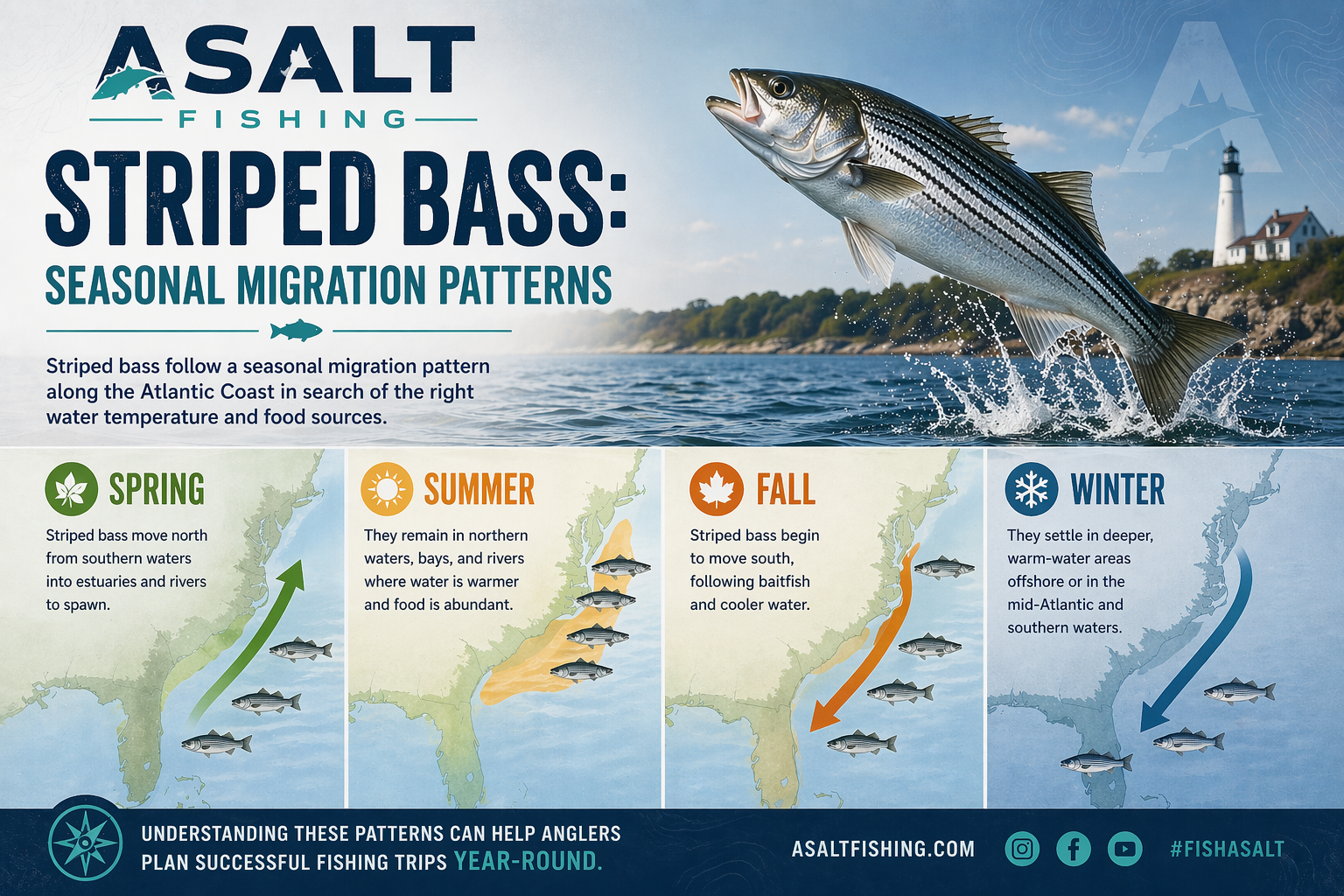
The majority of the migratory striped bass population spawns in the Chesapeake Bay and Delaware River systems each spring. From there, fish push northward along the coast through the summer, reaching as far as Maine and Nova Scotia, before reversing course in the fall and returning south to overwinter.
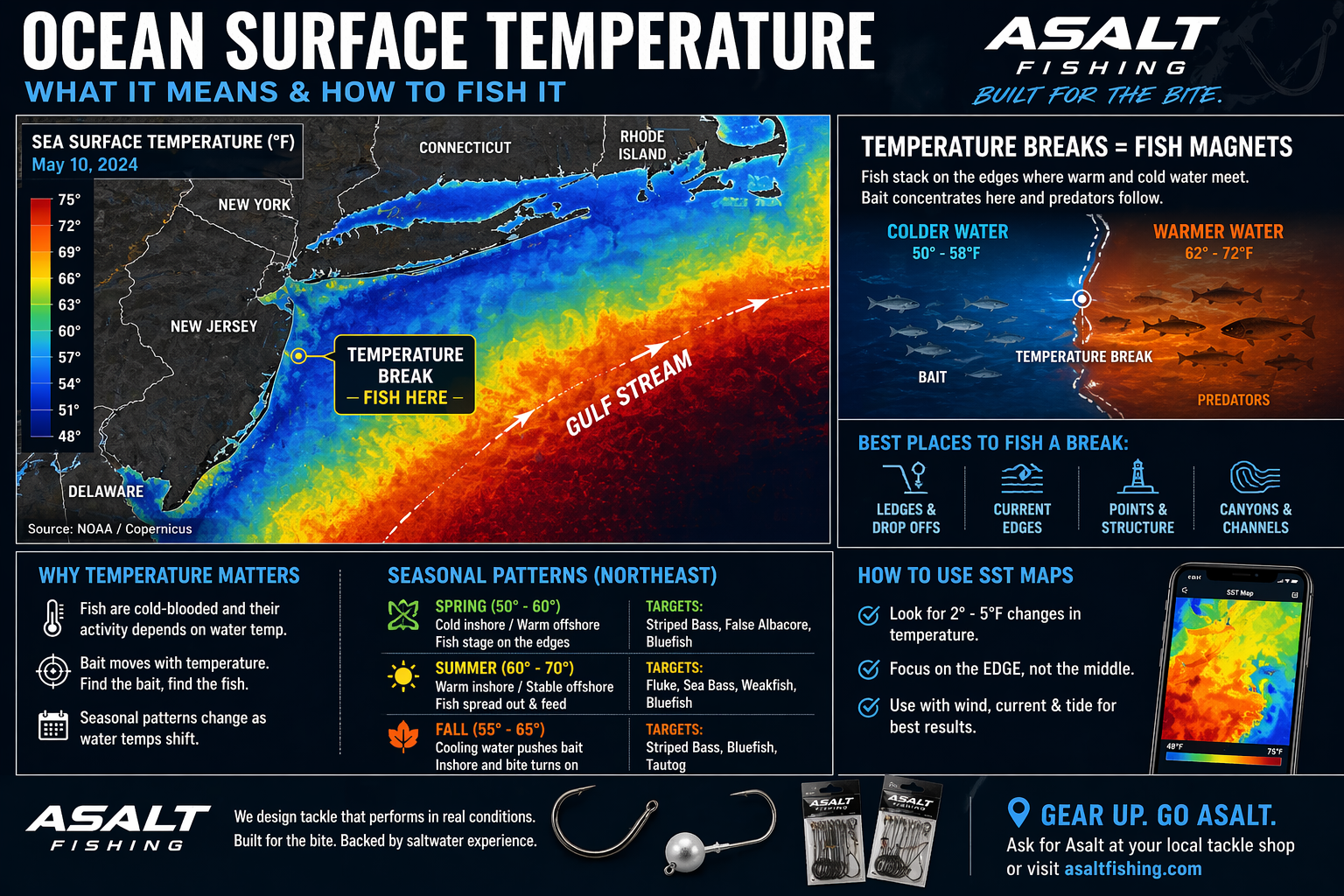
This migration follows one primary driver: the 50–65°F temperature band. Striped bass feed most aggressively in this range. As the 50°F isotherm moves north in spring, the fish follow. As it retreats south in fall, so do they.
Understanding this simple fact transforms how you plan your fishing calendar.
Spring: The Arrival
When: March through May (varies by latitude)
Spring striper fishing begins in the Chesapeake as early as February, when post-spawn fish begin filtering out of the bay and moving northeast. By late March, fish are showing in Delaware Bay and along the Jersey Shore. April and May bring the bulk of the migration to New York, Connecticut, and Rhode Island. By late May, fish are pushing into Massachusetts and beyond.
Where to Fish in Spring
- Inlets and river mouths — Stripers stage in moving water as they transition from bay to open coast. Inlets concentrate fish and create feeding ambush points.
- Sandy beaches and surf zones — Early spring stripers hunt sand eels and small baitfish in the wash. Dawn and dusk surf fishing can be exceptional.
- Estuaries and back bays — Smaller schoolie bass push into warming back-bay waters ahead of larger fish moving offshore.
Spring Tactics
- Water is still cold — slow your retrieve significantly
- Match the hatch: sand eels, small herring, and spearing are the primary forage
- Bucktail jigs, soft plastic shads, and small needlefish plugs are top producers
- Fish the moving tide — stripers feed on tidal flow, not slack water
Summer: The Holdovers and the Offshore Push
When: June through August
Summer striper fishing splits into two distinct fisheries depending on your location and target size.
Schoolie Holdovers (Inshore)
Smaller stripers — fish under 28 inches — tend to remain inshore through summer, holding in back bays, estuaries, tidal rivers, and around structure like docks, jetties, and bridges. These fish are opportunistic feeders and highly accessible to light-tackle anglers.
As surface temperatures push above 70°F, even inshore fish become lethargic during midday. Focus on early morning, evening, and nighttime tides when water temps drop and fish become active again.
Trophy Fish Go Deep (Offshore)
The largest striped bass — fish over 30 pounds — are notorious for seeking thermal refuge in summer. They push to deeper, cooler water: offshore lumps, underwater ridges, and deep rips where cold water wells up from depth. In Southern New England, spots like Cox Ledge and the Race hold trophy stripers through the summer months when inshore fish have scattered.
Summer Tactics
- Topwater lures at dawn and dusk produce explosive strikes on schoolie fish
- Live-lining bunker (menhaden) is the gold standard for trophy fish
- Chunking with cut bunker works well from boats anchored on structure
- Eels fished at night near jetties and bridges are a consistent producer
- Deep jigging on offshore structure targets summer trophy fish
Fall: The Blitz Season
When: September through November
Fall is widely considered the best striper fishing of the entire year — and for good reason. As water temperatures cool back into the 55–65°F feeding zone, striped bass switch into a feeding frenzy, aggressively chasing baitfish schools as they migrate south ahead of winter.
The fall migration concentrates both bait and predators in ways that create the legendary blitz — when breaking fish drive schools of bunker or mullet to the surface and attack in full view of shore-based anglers. Few fishing experiences on the East Coast compare to a full-scale fall striper blitz from the beach.
Where to Fish in Fall
- Beaches and points — Migrating baitfish hug the coast, and stripers follow tight. Points that extend into the current concentrate both.
- Inlets and cuts — Moving baitfish funnel through inlets, and stripers stack up to ambush them.
- Offshore rips and humps — Large fish stage offshore before committing to the full southern migration.
- Canal and river systems — The Cape Cod Canal is famous for fall striper fishing as fish push through on their southward journey.
Fall Tactics
- Match the primary baitfish — bunker, mullet, and herring dominate fall forage
- Large surface plugs (pencil poppers, Danny plugs) excel during blitz conditions
- Live-lining bunker in the surf or from a boat is deadly when schools are present
- Heavy bucktails and paddle-tail swimbaits cover water quickly when searching for fish
- Watch for birds — diving terns and gannets mark feeding fish from a distance
Winter: The Southern Grounds
When: December through February
By December, most migratory striped bass have returned to their wintering grounds in the Chesapeake Bay, Delaware Bay, and nearshore waters off the Mid-Atlantic. Water temperatures have dropped below the 45°F threshold where feeding activity becomes minimal.
However, not all stripers migrate. Resident populations exist in several locations year-round — most notably the Hudson River, Delaware River, and portions of the Chesapeake. These fish can be caught through winter by anglers willing to fish slow and deep.
Winter Tactics
- Fish extremely slow — cold fish won't chase, they ambush
- Jig vertically over deep structure and channel edges
- Soft plastics fished on the bottom outperform fast-moving lures
- Target the warmest water available — power plant outflows are winter hotspots
Striped Bass Migration Timeline by Region
| Region | Arrival | Peak | Departure |
|---|---|---|---|
| Chesapeake Bay | Feb–Mar | Apr (spawn) | May–Jun |
| Delaware Bay / Jersey Shore | Late Mar | Apr–May | Nov–Dec |
| New York / Long Island | Apr | May & Oct | Nov–Dec |
| Connecticut / Rhode Island | Late Apr | May–Jun & Sep–Oct | Nov |
| Massachusetts / Cape Cod | May | Jun & Sep–Oct | Oct–Nov |
| Maine / Nova Scotia | Jun | Jul–Aug | Sep–Oct |
Reading Water Temperature for Stripers
The single best tool for timing the striper migration is a sea surface temperature (SST) chart. Free SST data is available from NOAA CoastWatch and updated daily from satellite imagery. When the 50°F isotherm reaches your stretch of coast, fish are close. When surface temps climb past 68°F, the big fish have moved on or gone deep.
Apps like Windy.com include SST overlays that let you visualize temperature breaks and warm-water eddies — the same edges that concentrate stripers during their migration.
Regulations: Know Before You Go
Striped bass regulations vary significantly by state and change frequently. Minimum size limits, bag limits, and seasonal closures differ between New York, New Jersey, Connecticut, Rhode Island, Massachusetts, and federal waters. Always check your state's current DEC or DMF regulations before heading out — striped bass stocks have faced pressure in recent years and regulators have tightened rules accordingly.
The Bottom Line
Striped bass fishing rewards the angler who does their homework. This isn't a species you stumble into — the fish move on a schedule, follow temperature, and stack up in predictable locations season after season. Once you internalize the migration pattern, you stop chasing fish and start intercepting them.
Know the route. Watch the temperature. Be where the bait is. The stripers will follow.
Up next: The Best Striped Bass Lures by Season — What to Tie On From Spring Through Fall
1 comment
Very interesting