

How to Clean & Fillet Fluke (Summer Flounder): Step-by-Step Guide | Asalt Fishing
Most anglers only take two fillets from a fluke and leave half the fish behind. Learn the correct four-fillet flatfish technique and get every last bit of sweet, white meat from every summer flounder you...
How to Clean
& Fillet Fluke
Summer flounder are one of the Northeast's finest eating fish. Here's how to get four perfect fillets from every single one.
Fluke — officially known as summer flounder — are one of the most popular catches on the Northeast coast, and for good reason. They're aggressive, they fight hard, and they're absolutely outstanding table fare. Sweet, mild, white flesh that works in almost any preparation. The only thing standing between your catch and your plate is knowing how to clean them correctly.
Here's what most anglers don't realize: a fluke is a flatfish, which means the filleting technique is completely different from a round fish like a striper or bluefish. Done right, you get four fillets from a single fluke — two from the top (dark side) and two from the bottom (white side). Done wrong, you leave a lot of meat on the bone. This guide walks you through every step so nothing gets wasted.
What Makes Fluke Different to Fillet
Unlike a round fish where both fillets come off the sides, a flatfish like fluke lies flat on the seafloor with both eyes on one side (the dark top side). The fish has four distinct fillet sections separated by a central backbone and a lateral line running down the center of each face. Understanding this anatomy is the key to maximizing your yield.
Each face of the fish — top and bottom — yields two fillets, one on either side of the spine. That gives you four fillets total per fish. On larger fluke (sometimes called "doormats" by local anglers), these fillets can be substantial. Even on a legal-minimum fish, the four-fillet approach recovers significantly more meat than a simple two-fillet method.
| Attribute | Detail |
|---|---|
| Common Name | Fluke, Summer Flounder |
| Scientific Name | Paralichthys dentatus |
| Typical Keeper Size | 17–18 inches and up (varies by state) |
| Fillet Yield | 4 fillets per fish; ~35–40% of whole fish weight |
| Flesh | White, mild, delicate — zero fishy taste |
| Prime Season | May through October along the Northeast coast |
| Best Table Size | 18–24 inches — sweet spot for flavor and yield |
Size Limits & Regulations
Fluke are a regulated species along the Atlantic coast with minimum size limits, bag limits, and season dates that vary by state and change year to year. Before you keep any fish, always verify the current rules for your state.
Fluke size limits and bag limits differ by state — New York, New Jersey, and Connecticut each have their own rules, and they are updated regularly by state fisheries agencies. Always check your state's DEC or Fish & Wildlife website before your trip. Regulations can change mid-season. When in doubt, release the fish.
As a general rule of thumb for the Northeast, legal fluke tend to run 17–18 inches minimum, but confirm your specific state's current regulation before every trip. Fluke populations are managed carefully, and compliance keeps this fishery healthy for future seasons.
Tools You'll Need
The most critical tool is a sharp, flexible fillet knife. Fluke have a flat, wide skeleton with many fine bones close to the surface. A stiff or dull blade will tear the delicate flesh and leave meat behind. A flexible blade bends and follows the contours of the skeleton — that's where your yield comes from.
Preparing the Fish
A few minutes of prep before you start makes a significant difference in how cleanly the fillets come off.
Keep fish cold. Fluke flesh is delicate and deteriorates quickly at warm temperatures. Keep them on ice right up until the moment you start cleaning. Cold fish are firmer, cleaner, and easier to work with.
Rinse the fish. A quick rinse under cold running water removes slime and any debris from the surface. Dry with a paper towel for better grip.
No scaling needed. Unlike round fish, you'll be removing the skin from fluke fillets entirely in most cases, so scaling is unnecessary. If you prefer to cook skin-on (some anglers do for pan-frying), the scales are very fine and come off quickly with a quick scrape.
Start with the dark (top) side. Always begin filleting on the dark side of the fish — the side with both eyes. The fillets are slightly larger on the dark side and it's easier to orient your cuts starting from this face.
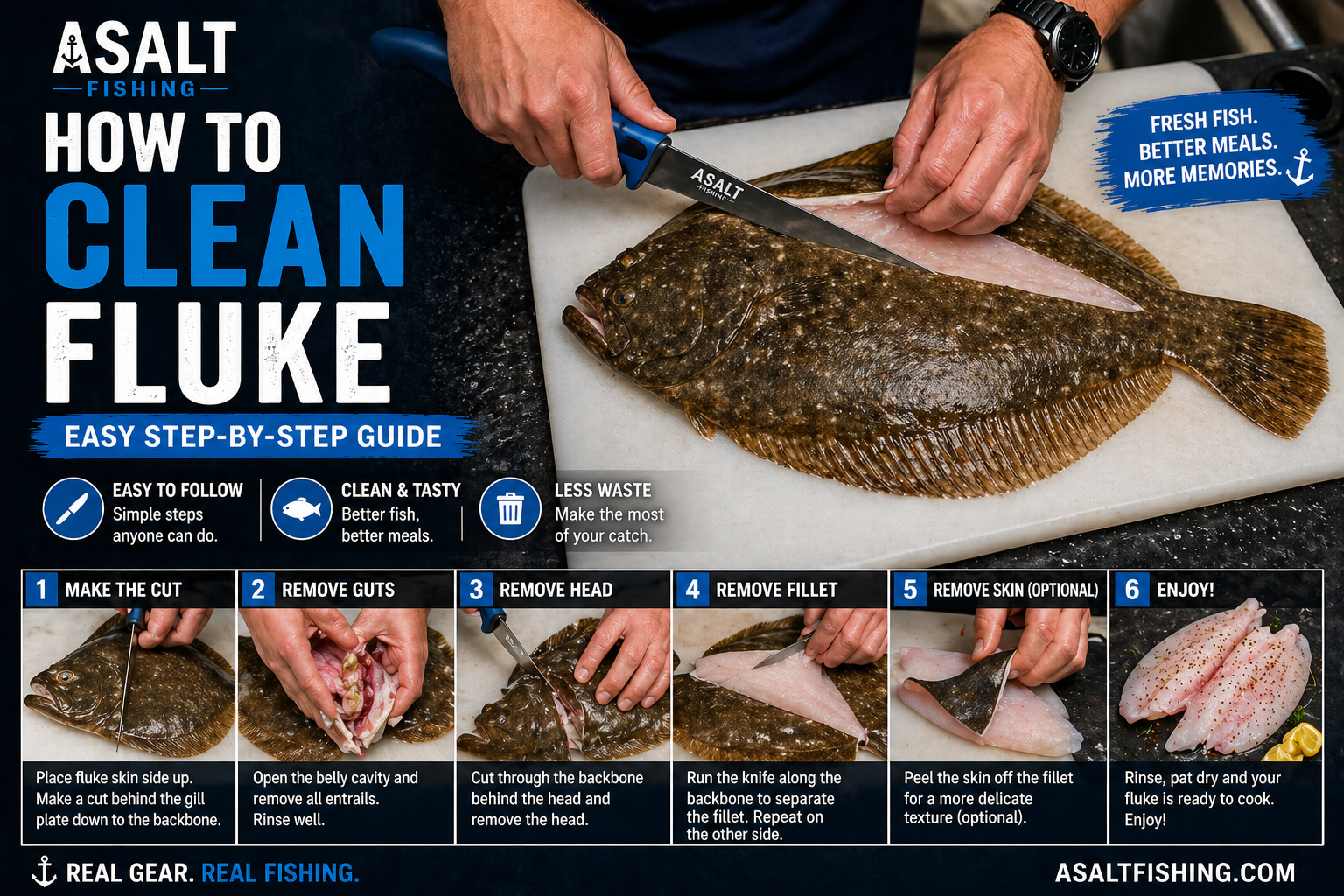
Step-by-Step: How to Fillet a Fluke
Remember: you're getting four fillets from this fish — two cuts per side. The spine runs down the center, and you'll cut one fillet from each side of it on both the top and bottom of the fish. Take your time on the first few fish and the technique will become second nature quickly.
Lay the Fish Flat — Dark Side Up
Place the fluke dark-side up on your cutting board, with the head pointing away from your dominant hand. This is your starting position. The lateral line — a faint line running lengthwise down the center of the fish — will guide your first cut.
Wet the cutting board slightly to stop the fish from sliding while you work.
Cut Along the Lateral Line
Using the tip of your fillet knife, make a shallow cut along the lateral line from just behind the head all the way to the tail. This cut goes straight down the center of the fish and separates the two top fillets. You're not cutting through to the skeleton yet — just scoring the surface along this center line to create your guide.
The lateral line is slightly raised and visible on most fluke. It runs straight from behind the gill plate to the tail on both sides.
Make the Head Cut
At the head end of your lateral line cut, angle the knife toward the head and make a cut down behind the gill plate, going all the way to the backbone. This opens up the fillet and gives you a clean starting edge to work from.
Fillet the First Top Section
Starting from your head cut, lay the blade flat and angle it slightly downward toward the backbone. Work the knife from the center lateral line cut outward toward the edge of the fish, using long smooth strokes to glide the blade over the ribs and bones. Keep the knife as close to the skeleton as possible. Lift the fillet gently with your free hand as you go to see what you're cutting. When you reach the outer edge, cut through the thin fin line to free the fillet completely.
Think of it as peeling the fillet off the skeleton rather than cutting through it. Let the flexibility of the blade do the work.
Fillet the Second Top Section
Rotate the fish 180 degrees so the tail is now pointing away from you. Repeat the same process on the other side of the lateral line — starting at the head cut, working the blade outward over the skeleton from center to edge. You now have two top fillets. Set them aside on ice.
Flip and Repeat on the White Side
Flip the fish over so the white (blind) side faces up. Repeat the entire process — lateral line cut, head cut, then fillet outward from center to edge on each side of the spine. The white-side fillets are typically slightly smaller than the dark-side fillets but equally delicious. You now have four fillets total.
On the white side, the bones are often more visible through the translucent flesh — use this to your advantage to keep the knife close to the skeleton.
Trim & Inspect Each Fillet
Lay each fillet flat and trim any ragged edges, thin belly flaps, or dark bloodline tissue if desired. Run your fingertip across the thickest part of each fillet to check for any remaining pin bones — pull them with needle-nose pliers if found. Rinse each fillet under cold water and place immediately on ice.
"Four fillets from one fluke. Most people only take two and leave half the fish behind. Once you learn the technique, you'll never go back."
— Northeast Flatfish Fishing TraditionHow to Skin the Fillets
Most fluke preparations call for skinless fillets — the skin is thin but slightly chewy and has little flavor on its own. Removing it is quick once you know the motion.
To skin a fluke fillet: Place the fillet skin-side down on your board. At the tail end, make a small cut between the skin and the flesh — just enough to create a grip tab. Hold the skin tab firmly with your free hand (a paper towel improves grip dramatically) and angle the blade flat between the skin and meat. Use a gentle back-and-forth sawing motion while pulling the skin toward you. The blade should barely move — it's the skin being pulled that does the work.
Fluke skin is thinner than striper skin and releases more easily. The whole process takes about 10 seconds per fillet once you've done a few.
Some anglers prefer to pan-fry fluke skin-on for added structure and a slightly crispy edge. If cooking skin-on, scale the fish before filleting and score the skin with 2–3 shallow cuts to prevent curling in the pan. The dark-side skin has a stronger flavor than the white-side skin.
Pro Tips for Better Fillets
- Always get four fillets. The four-fillet flatfish method recovers up to 40% more meat than a two-fillet approach. Never leave the white side behind.
- Sharp knife is non-negotiable. Fluke flesh is soft and tears easily with a dull blade. Hone your edge before every session — this single habit improves every fillet you'll ever cut.
- Work cold, ice fast. Fluke deteriorates faster than most other fish at room temperature. Ice your fillets immediately and keep them cold through storage.
- Let the blade follow the bones. Don't force the knife — let it flex and follow the skeleton. Resistance means you're going the wrong direction; ease the blade angle and let it glide.
- Recover meat from the carcass. After filleting, check the carcass along the spine — there's often a strip of overlooked meat along the centerline worth scraping off with the knife tip.
- Soak in salted water. A 15-minute soak in cold salted water draws out any remaining blood, firms the flesh, and results in a cleaner, whiter fillet before cooking.
- Save the carcass for stock. Fluke frames make excellent, mild fish stock. Don't throw them away — freeze and use them later for chowder or seafood bisque.
Storing & Freezing Fluke Fillets
Refrigerator: Fluke fillets are best eaten within 24–48 hours of cleaning. Store them loosely covered in the coldest part of your refrigerator, ideally resting on a small rack over ice to keep them out of any liquid that accumulates.
Freezer: Fluke freezes beautifully. Vacuum sealing is the gold standard — it eliminates freezer burn and preserves the mild, delicate flavor for up to 6 months. Without a vacuum sealer, wrap tightly in plastic wrap, then place in a zip-lock bag with all air pressed out. Label with the species and date.
Thawing: Always thaw frozen fluke fillets in the refrigerator overnight. Never thaw at room temperature. For faster thawing, place the sealed bag in cold water. Pat completely dry before cooking — frozen fish releases moisture as it thaws, which will prevent a proper sear.
| Method | Max Time | Notes |
|---|---|---|
| Refrigerator | 1–2 days | Keep on ice; cook as fresh as possible |
| Freezer — vacuum sealed | Up to 6 months | Best quality within 3 months |
| Freezer — zip-lock | 2–3 months | Press all air out; double wrap |
Frequently Asked Questions
How many fillets do you get from a fluke?
You get four fillets from a single fluke — two from the dark (top) side and two from the white (bottom) side of the fish. Most beginners only take two, leaving half the meat behind. The four-fillet flatfish technique is the correct approach and maximizes your yield from every fish you keep.
Do you need to scale a fluke before filleting?
No — if you're removing the skin, you don't need to scale at all. Simply fillet and skin as described above. If you prefer skin-on fillets for pan-frying, a quick scrape from tail to head with a scaler or spoon removes the fine scales quickly before you make your fillet cuts.
What is the best knife for filleting fluke?
A 7–9 inch flexible fillet knife is ideal. The flexibility is key — it allows the blade to bend and follow the flat, wide fluke skeleton without tearing the soft flesh. A stiff or dull blade is the number one reason anglers get ragged fillets with poor yield. Always sharpen before filleting.
Is fluke good to eat?
Fluke is considered one of the finest eating fish in the Northeast. The flesh is white, mild, sweet, and completely non-fishy in flavor. It's extremely versatile — excellent pan-fried, baked, stuffed, in tacos, or in light summer dishes. Many anglers and chefs consider summer flounder among the best-tasting flatfish on the East Coast.
How do you remove pin bones from fluke?
Run your fingertip along the center of the fillet from head to tail to feel for pin bones. They're present in the thickest part of the fillet. Use needle-nose pliers or fish tweezers, grip each bone close to the flesh, and pull at a slight angle toward the head end of the fillet. Work through the entire row and do a final check with your fingertip before cooking.
What is the minimum size for keeping fluke in New York and New Jersey?
Fluke size limits vary by state and change regularly — always check your state's current regulations before keeping any fish. As a general reference, Northeast states typically set minimums in the 17–18 inch range, but this changes seasonally based on stock assessments. Visit your state's DEC or Fish & Wildlife website for the most current rules.
How long does it take to fillet a fluke?
Expect 8–12 minutes your first few times. With practice, most anglers can fully fillet a fluke — all four fillets — in 4–5 minutes. The lateral line cut and the white-side fillets take a little time to get comfortable with, but it becomes fast and intuitive quickly.
Show Us Your Fluke Fillets
Tag your catch, your cleaning table setup, and your finished plate. We want to see your doormat and your four-fillet haul.
Follow @asalt.fish on Instagram