

Best Fluke Rig for Gulp (Hi-Lo Setup) – How to Catch More Summer Flounder
Learn the best fluke rig for Gulp and how to fish it effectively. This proven hi-lo setup combines Gulp and bait to help you catch more summer flounder in Northeast waters.
Best Fluke Rig for Gulp: How to Catch More Summer Flounder
What actually works when the drift is slow, the current is pushing, and the fish aren’t cooperating.
If you’ve fished for fluke in the Northeast, you’ve seen it happen. Same drift, same water, same bait—and one boat is catching while another isn’t.
Most of the time, it’s not the Gulp. It’s the rig and how it’s being fished.
Use a fluke hi-lo rig for Gulp and bait designed for drifting:
👉 Shop the Fluke Hi-Lo Gulp Rig
👉 Browse all fluke rigs
Why Gulp Works for Fluke
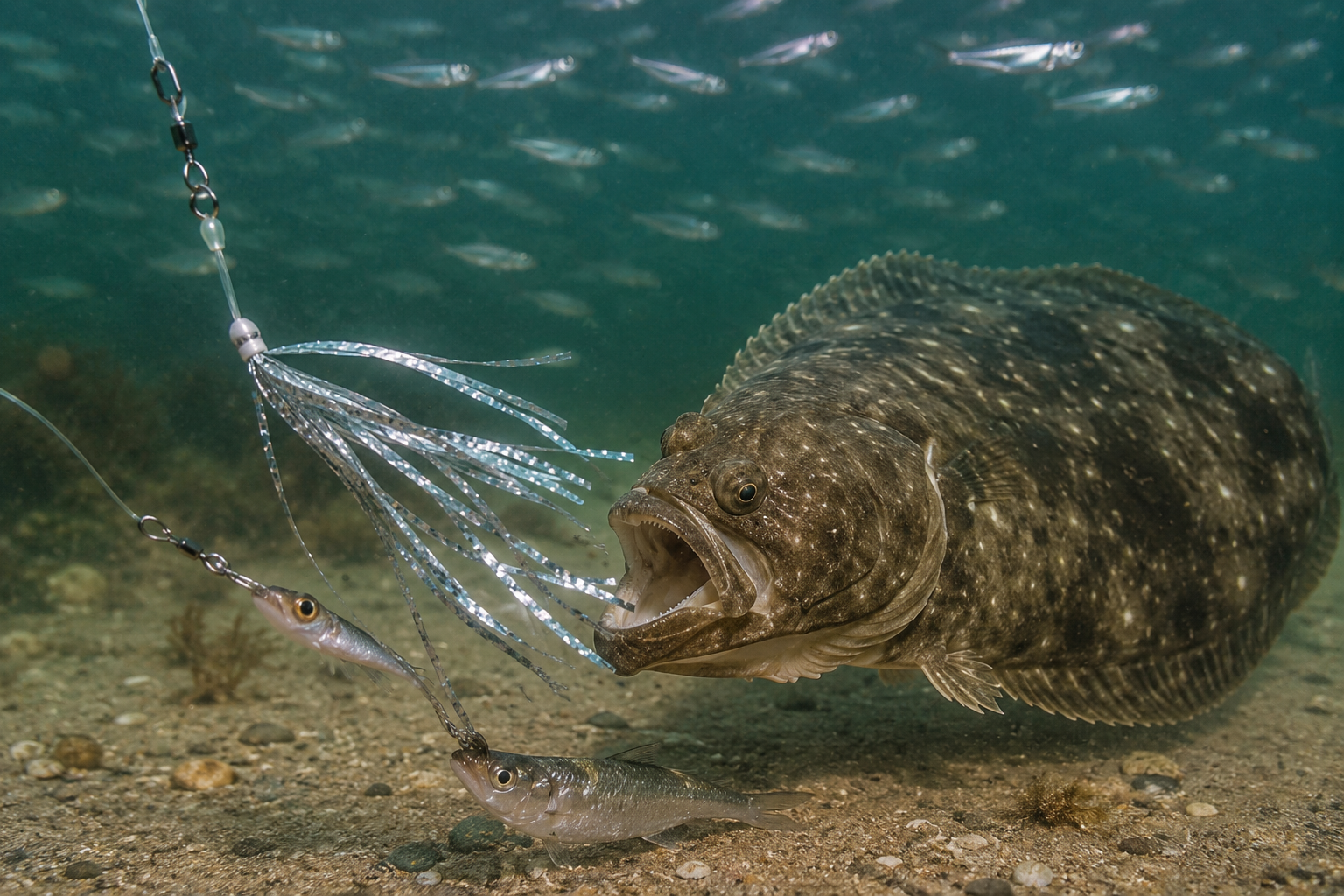
Fluke are ambush predators. They sit on the bottom—sand, mud, shell, structure—and wait for bait to move overhead.
Gulp works because it does two things extremely well: it releases scent into the water and creates natural movement in the current. When fished correctly, it draws fish up off the bottom and triggers strikes.
The key is keeping that bait in the strike zone—just off the bottom—where fluke are looking.
Common Mistakes Fishing Gulp
Drifting too fast. If you’re moving too quickly, the bait doesn’t work. You want a controlled drift so the Gulp can move naturally.
Wrong rig. A poor fluke rig for Gulp won’t hold the bait correctly or present it properly in the water.
Losing bottom contact. If your sinker isn’t tapping bottom, you’re not fishing where fluke live.
Best Fluke Rig for Gulp
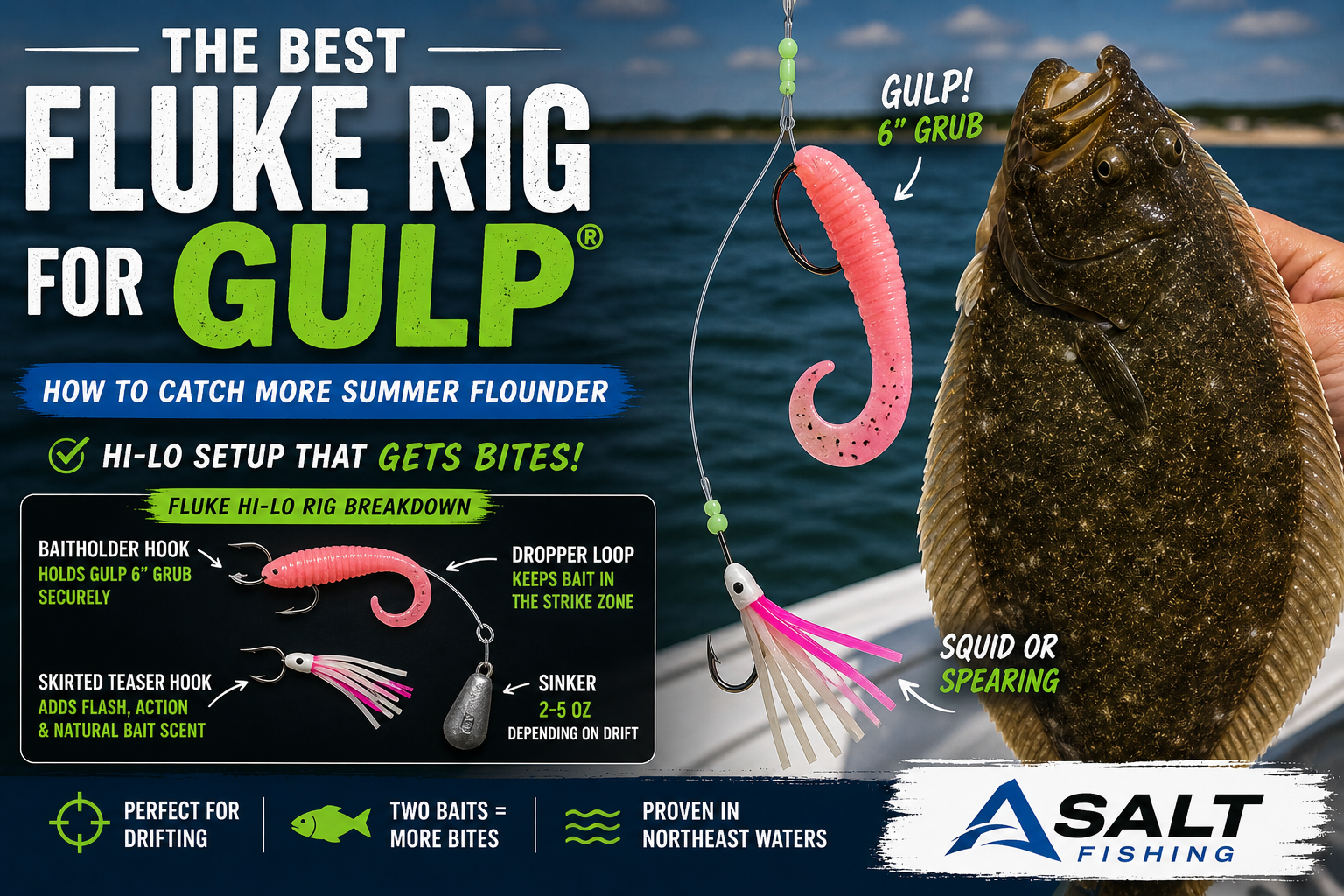
The most effective setup is a fluke hi-lo rig built for both artificial and natural bait.
This type of summer flounder rig gives you two presentations at once:
- Baitholder hook: Holds Gulp securely so it doesn’t slide
- Skirted teaser hook: Adds flash, movement, and natural bait scent
- Bottom dropper loop: Keeps your rig in the strike zone
This is why a properly built fluke hi-lo rig for Gulp consistently outperforms single-hook rigs.
How to Fish Gulp for Fluke
Drop your rig to the bottom and keep light contact with your sinker. You want it tapping, not dragging.
Lift your rod slowly, then let it fall. Most bites happen on the drop when the bait flutters naturally.
Keep your drift controlled and stay near bottom—this is the most important part of fluke fishing.
Drift Tips
- Use enough weight to stay on bottom
- Keep your drift slow and controlled
- Adjust based on current and depth
- Stay over structure when possible
👉 Learn more: How to Catch Fluke (Complete Guide)
Recommended Setup
• Fluke Hi-Lo Gulp Rig
• Gulp shrimp or swimming mullet
• Squid strip or spearing on second hook
• 2–5 oz sinker depending on drift
This combination consistently produces more bites in Northeast waters.
👉 Shop this setup
Best Gulp Colors for Fluke
Pink is one of the most consistent producers, especially in stained water.
Chartreuse stands out in deeper water and low visibility.
White works best in clear water and bright conditions.
The best fluke rig for Gulp should be available in these proven colors so you can match conditions.
Gulp vs Natural Bait
Gulp provides strong scent and durability. Natural bait like squid and spearing adds real movement and smell.
The best approach is using both together on a fluke hi-lo rig. This gives fish multiple reasons to strike and increases your hookup ratio.
Shop Fluke Rigs Built for Northeast Fishing
If you want a proven fluke rig for Gulp, shop the Fluke Hi-Lo Gulp Rig or browse all fluke rigs and summer flounder rigs.
Fluke Rig FAQ
What is the best fluke rig for Gulp?
A fluke hi-lo rig with a baitholder hook is one of the best setups for fishing Gulp effectively.
How do you fish Gulp for fluke?
Fish it slowly while drifting and keep your bait close to the bottom where fluke feed.
Is a hi-lo rig good for fluke?
Yes, hi-lo rigs present two baits and increase your chances of hookups.
Can you use Gulp and bait together?
Yes. Combining Gulp with squid or spearing is one of the most effective fluke setups.