

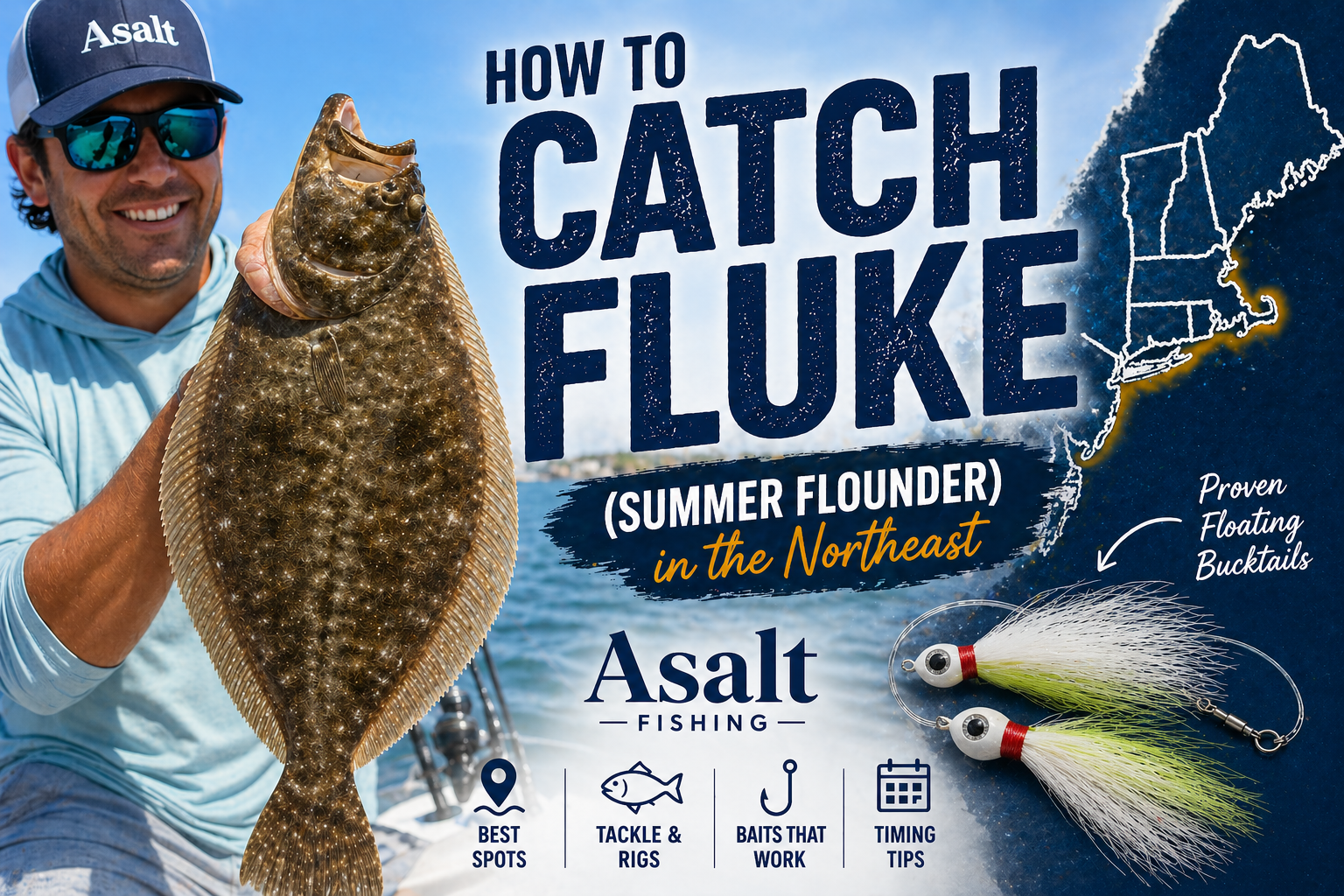
How to Catch Fluke: Best Rigs, Bait & Drift Tips for Summer Flounder
Learn how to catch fluke (summer flounder) with the right rigs, bait, and drift techniques. Expert tips from Asalt Fishing — designed by fishermen, for fishermen.
How to Catch Fluke: Best Rigs, Bait & Drift Tips for Summer Flounder
Fluke — also called summer flounder — are one of the most popular target species along the Northeast coast, and for good reason. They’re aggressive, hard-fighting, and excellent table fare. Whether you’re drifting the bays of New York and New Jersey or working inlets off Connecticut and Massachusetts, this guide covers everything you need to know to consistently put fluke in the boat.
What Is a Fluke (Summer Flounder)?
Fluke (Paralichthys dentatus) are flatfish that lie camouflaged on the sandy bottom, waiting to ambush prey. Despite their flat appearance, they’re surprisingly aggressive predators with sharp teeth and fast strikes. They range from Nova Scotia down to Florida, but the heart of fluke country runs from Maryland to Massachusetts, where party boats and private vessels chase them from late spring through early fall.
Fluke are left-eyed fish — meaning both eyes sit on the left side of their body — and they’re distinguished by three dark spots near the tail. A true “doormat” fluke can exceed 10 pounds, though most fish caught in bays average 1–3 lbs.
Recommended Fluke Gear
Having the right setup can make the difference between catching shorts and landing true doormat fluke. At Asalt Fishing, our rigs are designed specifically for Northeast drift fishing conditions from New Jersey to Montauk.
Best Rigs for Catching Fluke
Choosing the right rig is critical when targeting summer flounder. Different conditions call for different presentations depending on current speed, bait presence, and water clarity.
Fluke Hi-Lo Rigs
A classic fluke hi-lo rig is one of the most effective setups for Northeast fluke fishing. The dual-hook presentation keeps baits separated and allows anglers to target aggressive fish feeding close to the bottom.
The added silver mylar flash imitates spearing, sand eels, and small baitfish — especially effective when larger fluke are actively feeding during summer months.
Floating Bucktail & Drift Rigs
When drifting over rough bottom or structure, a floating drift rig can help keep your bait slightly elevated above the bottom where larger fluke often ambush prey.
These rigs are highly effective when fishing with Gulp, squid strips, or live bait in areas with strong tidal movement.
The flash material creates extra visibility and reaction strikes, especially in stained water conditions common in New Jersey and New York back bays.
Double Bucktail Fluke Rigs
A double bucktail fluke rig excels when fluke are aggressively feeding on bait schools. Bucktails provide extra movement and profile while maintaining bottom contact.
Pink, white, and chartreuse combinations are especially productive during the peak summer fluke season.
Best Baits for Fluke
Successful fluke anglers match their bait to the local forage. Some of the best options include:
- Spearing
- Squid strips
- Gulp swimming mullets
- Live minnows
- Sand eels
- Strip baits
Combining natural bait with flashy teaser rigs often produces the best results for larger fish.
How to Drift for Fluke
Drift speed is one of the most overlooked parts of fluke fishing. Ideally, you want a controlled drift that keeps your bait bouncing naturally along the bottom without dragging too aggressively.
Most successful anglers target moving water around channels, structure edges, reefs, wrecks, and sandy drop-offs.
Using purpose-built Asalt Fishing fluke rigs helps maintain proper bait presentation while maximizing hookups.
Ready for Fluke Season?
Shop Northeast-tested fluke rigs trusted by anglers from New Jersey to Montauk.
Shop Related Fluke Gear
Related Fluke Articles
Best Fluke Rigs1. The Floating Drift Rig
This is the go-to rig for beginners and veterans alike. A floating drift rig uses a float or spinner to keep your bait slightly elevated off the bottom, making it more visible and giving it a natural swimming action as you drift.
Our Fluke Floating Drift Rig is hand-tied specifically for this style of fishing. Available in white, pink, and chartreuse, it’s designed to keep bait moving naturally and cover water efficiently on the drift. It’s one of the most effective ways to target summer flounder consistently.
2. The High-Low Rig
A high-low rig (sometimes called a chicken rig) presents two baits at once — one near the bottom and one slightly above. It’s particularly effective in shallow water where fluke will rise to strike. If you miss a hit on the lower hook, there’s a second chance on the upper.
3. Bucktail Jig with Trailer
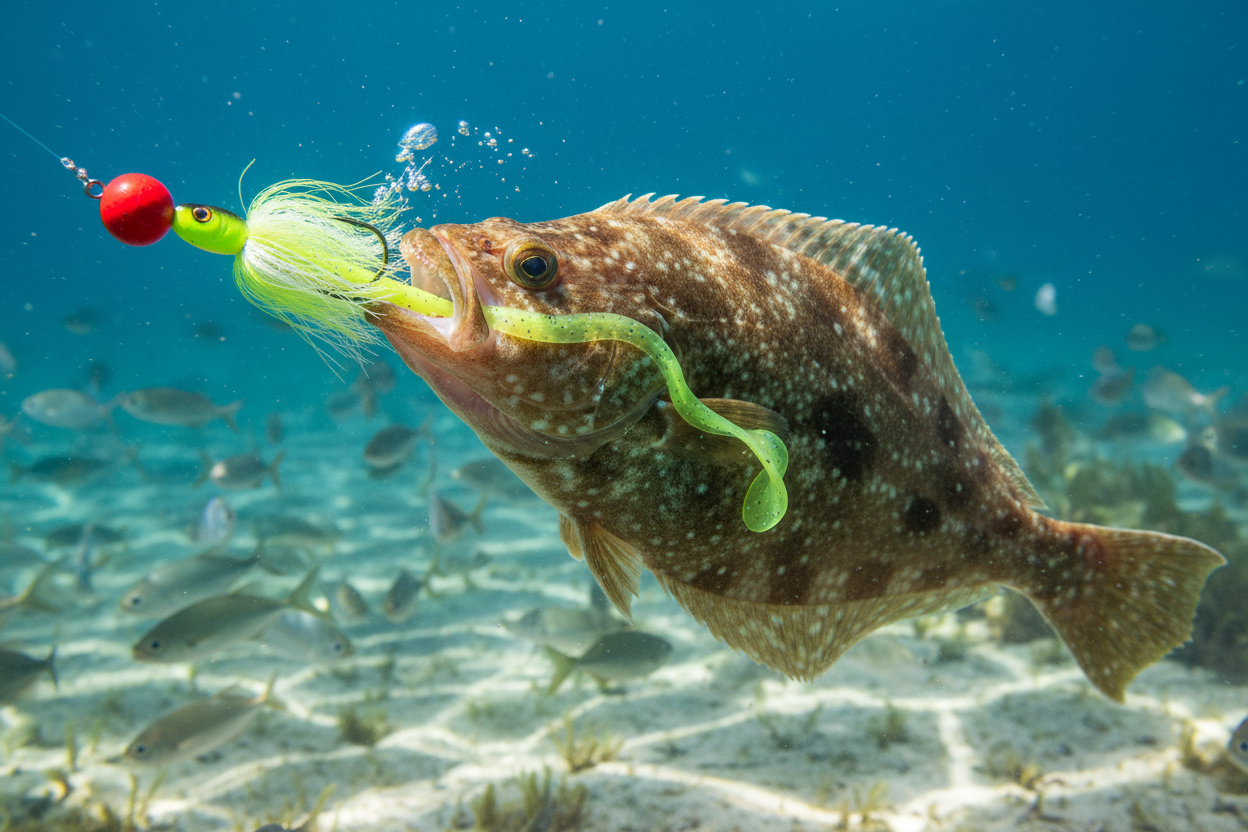
A bucktail jig tipped with a strip of squid or a Gulp! bait is the classic “doormat hunter” setup. White, chartreuse, and pink are the most productive colors. Work it by bouncing the rod tip along the bottom as you drift — the jig kicks up little puffs of sand that trigger strikes.
The right rig makes all the difference on fluke. Our Fluke Floating Drift Rig is hand-tied by fishermen right here in the USA — built for exactly the kind of fishing this guide covers. Grab a few before the season picks up.
Tight lines — see you on the water.