

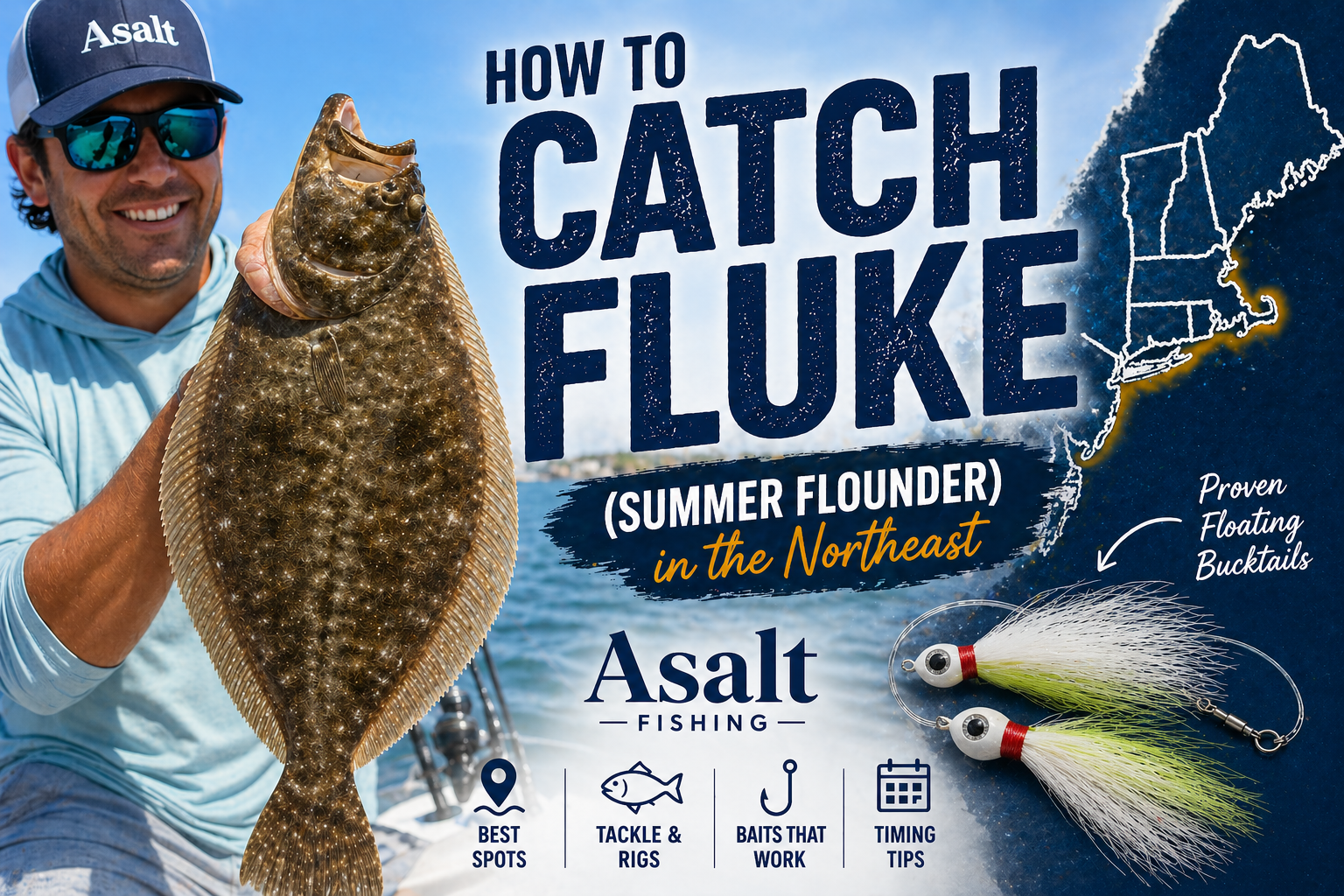
How to Catch Fluke (Summer Flounder) in the Northeast | Asalt Fishing
Fluke are one of the most sought-after fish in the Northeast — aggressive, accessible, and incredible at the dinner table. Joe Castelli shares his complete guide to catching summer flounder from NJ to Cape Cod:...
How to Catch Fluke (Summer Flounder) in the Northeast: The Complete Guide
Fluke — officially called summer flounder (Paralichthys dentatus) — are one of the most sought-after fish in the Northeast, and for good reason. They're aggressive, they fight hard for a flatfish, they're accessible from bays to offshore wrecks, and there are few better-eating fish you can pull out of Northeast waters. I've been catching them for over 50 years from New Jersey to Montauk, and this is everything I know.
Whether you're drifting Barnegat Bay on a summer afternoon, working the channels off Long Island Sound, or targeting doormat fluke over offshore structure, the principles are the same: stay near the bottom, keep moving, and match your presentation to what the fish are eating that day. Get those three things right and you'll consistently put fish in the cooler.
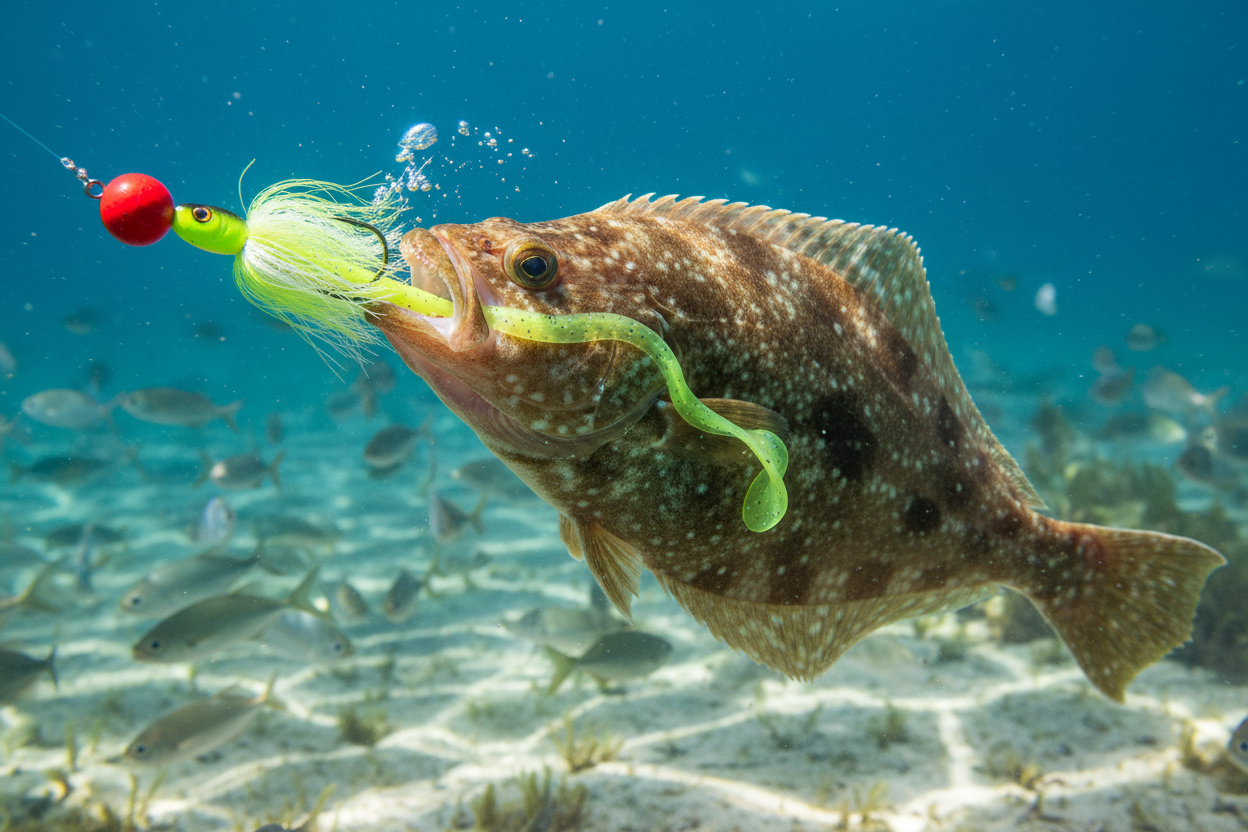
Fluke are ambush predators that lie flat on the bottom, perfectly camouflaged against sand and mud, and attack baitfish, squid, and crabs passing overhead. They are left-eyed flatfish — both eyes are on the left (dark) side of their body. Females grow much larger than males, reaching 20+ lbs and 20+ years old. The Northeast minimum keeper size is typically 17–18 inches depending on your state — always check current regulations before fishing.
Best Fluke Rigs for Northeast Summer Flounder
From New Jersey back bays to the deep water off Montauk, having the right fluke rig can dramatically increase hookups and help target larger doormat fluke.
At Asalt Fishing, our pre-tied fluke rigs are designed specifically for Northeast saltwater fishing conditions using proven hook spacing, flash materials, and tournament-ready components.


How to Catch Fluke in the Northeast
Fluke, also known as summer flounder, are one of the most popular inshore saltwater gamefish in the Northeast. Anglers from New Jersey, New York, Connecticut, and Rhode Island target fluke every summer using bucktails, teaser rigs, live bait, and drift rigs.
Fluke are ambush predators that feed aggressively around sandy structure, channels, wrecks, reefs, and drop-offs. Understanding drift speed, bait selection, and rig choice is critical to consistently catching keeper-sized fish.
Best Fluke Rigs
The right rig can make a huge difference when targeting larger summer flounder. Many experienced Northeast anglers prefer pre-tied fluke rigs because they save time, reduce tangles, and provide consistent presentation.
Fluke Hi-Lo Rigs
A fluke hi-lo rig is one of the most effective all-around setups for drifting bait naturally near the bottom.
The added mylar flash imitates spearing and sand eels, helping attract aggressive fluke in stained water or low-light conditions.
Floating Drift Rigs
A floating drift rig helps keep your bait elevated slightly above the bottom where larger fluke often strike.
These rigs are highly effective when paired with Gulp, squid strips, spearing, or live minnows.
Best Bait for Fluke
Matching local forage is one of the keys to successful fluke fishing. Popular baits include:
- Spearing
- Squid strips
- Gulp swimming mullets
- Live minnows
- Sand eels
- Strip baits
Combining natural bait with flashy teaser rigs often produces the best results for larger doormat fluke.
Upgrade Your Fluke Setup
Shop Northeast-tested Asalt Fishing fluke rigs trusted by anglers from New Jersey to Montauk.
How to Drift for Fluke
Drift speed is critical when targeting summer flounder. Ideally, anglers want enough movement to cover ground while still maintaining natural bait presentation near the bottom.
Many successful fluke anglers target:
- Channel edges
- Reefs
- Wrecks
- Sandy drop-offs
- Current seams
- Back bay structure
Using purpose-built Asalt Fishing fluke rigs helps maximize hookups while reducing tangles during long drifts.
Shop Related Fluke Gear
Related Fluke Articles
Understanding Fluke Behavior — Why They Bite (and Don't)
The most important thing to understand about fluke is that they are current-oriented, ambush feeders. They position themselves facing into the current so it delivers food to them. They sit in the slack water just behind structure — a rock, a channel edge, a wreck, a sandbar drop-off — and dart out to attack anything that washes past.
This behavioral fact drives everything about how you fish for them. You need current to move your presentation naturally. You need structure or bottom transition to concentrate the fish. And you need your bait moving at the same pace as the natural current — not faster, not anchored in place. That's the entire game in a nutshell.
Drift with the current, stay near the bottom, keep moving. Fluke rarely strike a stationary bait. They are triggered by movement — a bait or lure that rises and falls along the bottom as you drift gives the exact presentation that triggers their attack instinct. If you're not drifting, you're not fluke fishing.
Seasonal Timing & Migration
🌸 Spring (May–June)
Fluke migrate inshore from their winter offshore spawning grounds as water temps hit 55–60°F. The first fish to arrive in bays and inlets are often the largest. Target inlet mouths, channel edges, and the first sandy flats inside the bay. Excellent time for doormat fish.
☀️ Peak Summer (July–Aug)
Fish are spread throughout bays, inlets, nearshore ocean, and shallow reefs. This is the most accessible season — party boats, charter boats, and private anglers all find consistent action. Water temp 70°F+ pushes some bigger fish deeper or offshore.
🍂 Fall (Sept–Oct)
As water cools, fish fatten up for the offshore migration. Some of the largest fluke of the season are caught in September over nearshore structure and sand bottom. Fish concentrate near inlet mouths before heading out. A prime window for trophy fish.
❄️ Winter (Nov–Apr)
Fluke move offshore to the continental shelf in 120–300+ feet of water to spawn. Season is closed in most Northeast states. Fish are on the move and not accessible inshore. Plan and prepare your tackle for the spring opener.
Where to Find Fluke — Top Northeast Locations
Fluke are found throughout the Northeast coast, but these areas consistently produce the best action:
The Great South Bay, Fire Island Inlet, Moriches Inlet, and Shinnecock all produce outstanding fluke. Montauk's Fishers Island Sound and the inshore rips off the Point are legendary for doormat fish in late summer and fall.
Barnegat Bay and Barnegat Inlet are Joe's home waters and among the finest fluke grounds in the Northeast. Sandy Hook, the Shrewsbury Rocks, and the artificial reefs off Seaside and Manasquan produce exceptional numbers of fish all season.
One of the most underrated fluke fisheries on the East Coast. The lower Delaware Bay and the inshore ocean off Ocean City hold excellent populations of large fish with comparatively light fishing pressure.
Narragansett Bay, Buzzards Bay, and Block Island Sound offer exceptional fluke fishing from midsummer onward. The rocky bottom structure of Rhode Island holds big fish well into October. Watch Hill and Point Judith are reliable producers.
The Right Gear for Fluke Fishing
| Category | Bay / Inshore (Under 40 ft) | Offshore / Deep (40–100+ ft) |
|---|---|---|
| Rod | 6'6"–7' medium, fast action spinning | 6'–7' medium-heavy, sensitive tip |
| Reel | Spinning 3000–4000 (Penn Battle, Shimano Stradic) | Conventional 4000–6000 or light level-wind |
| Main Line | 15–20 lb braid, thin diameter | 30–40 lb braid |
| Leader | 20–25 lb fluorocarbon, 24"–36" | 30–40 lb fluorocarbon, 24"–36" |
| Sinker / Jig | 1–3 oz bank sinker or 1–2 oz bucktail | 3–8 oz bank sinker or 2–4 oz bucktail |
| Hook | 3/0–5/0 octopus (on hi-lo) or jig hook | 4/0–6/0 circle or wide gap |
Key gear insight: Fluke fishing is a feel game. You need to detect the subtle weight change when a fluke picks up your bait, often just a slight increase in resistance as you drift. Braided line with zero stretch transmits every sensation from the bottom — sand, mud, shell, structure, and the unmistakable tick of a fluke bite. Mono will hide these signals and cost you fish.
Fluke Rigs — Which One, When, and Why
Choosing the right rig for conditions makes a significant difference in how many fish you put in the cooler. Here are the four main setups — and the Asalt Fishing rigs built for each one:
Two hooks at different heights with bucktail teasers — the most versatile and productive fluke rig in the Northeast. Presents bait at two levels simultaneously and the bucktail flash triggers aggressive strikes. Available in White, Pink, and Chartreuse.
Shop Hi-Lo Double Bucktail →Single octopus hook with bucktail teaser on a 3-way sinker snap. Designed for drifting open sand bottom and channel edges where fluke are actively feeding. The 3-way snap lets you quickly change sinker weight to match current speed.
Shop Drift Rig →Bucktail teaser paired with a spinner blade that adds vibration and flash on top of color. The blade creates a disturbance that fluke home in on from a greater distance — outstanding when visibility is limited or fish are in a feeding frenzy.
Shop Teaser Spinner Rig →Clean two-hook hi-lo with no teasers attached — the purist's starting point. Add your own squid strips, Gulp, or live bait. Ideal when fish are being selective and you want full control over the presentation. Maximum flexibility for experienced anglers.
Shop Undressed Hi-Lo →🎣 Asalt Fishing Fluke Rigs — Hand-Tied for Northeast Waters
Every Asalt Fishing fluke rig is designed by Joe Castelli from 50+ years on the water and 15 years behind the tackle shop counter. Hand-tied in the USA by fishermen who fish these same bays and inlets every season.
Best Baits for Fluke
Live & Fresh Baits
Squid is the universal fluke bait — fresh strips cut into thin, 4–6" pennants are the gold standard. Cut the strip with a slight taper so it flutters as you drift. Live killifish (mummichogs) are the premium live bait, particularly for larger fish in bay systems. Hook through the lips or just behind the dorsal fin. Sand eels are irresistible to fluke and excellent on a hi-lo rig. Fluke belly — a strip cut from a previously caught fluke — is one of the most underrated baits in the box. The combination of a live killie and a squid strip on a two-hook rig ("the killie-squid combo") is Joe's personal go-to setup on the hi-lo.
Soft Plastics & Artificials
Berkley Gulp Shrimp and Swimmin' Minnows (3"–4") are legitimate game changers for fluke — on many days they outfish real bait because the scent dispersion is continuous. Thread them onto the teaser hook of any Asalt rig. White bucktail jigs (1–3 oz) tipped with a Gulp or squid strip are a standalone system — jig it with a lift-and-drop retrieve while drifting for explosive topwater-style bites just off the bottom. Chartreuse and pink bucktails shine in stained water; white and natural in clear water.
6 Techniques That Consistently Catch More Fluke
Master the Drift — Speed Is Everything
The optimal drift speed for fluke is between 0.8 and 1.5 knots. Too fast and your rig planes up off the bottom; too slow and it drags along the sand without the natural action that triggers strikes. Use your engine in neutral or with occasional bursts to control drift speed. A drift sock (sea anchor) slows you down in heavy wind. If you're marking fish on your sounder but not getting bites, adjust drift speed first before changing bait or rig.
Lift and Drop — Don't Just Drag
Even while drifting, actively work your rod. After the rig hits bottom, lift your rod tip from the 3 o'clock to 11 o'clock position slowly — then lower it back down and feel for the "thump" of the sinker touching bottom again. Repeat. This lift-and-drop action creates a rising and falling bait presentation that fluke cannot resist. A stationary bait on the bottom catches far fewer fish than one that's pulsing with every rod sweep.
Fish the Bottom Transitions — Drop-Offs and Edges
Fluke stack on the edges of channels, the seams where sand meets mud, and the upcurrent side of any structure. Use your chart plotter and sounder to identify depth changes of even 2–3 feet — fluke use these as ambush lines. Drift across these transitions repeatedly rather than drifting over flat, featureless bottom. The most productive drift is one that crosses a depth change with each pass.
Color Selection — Match the Water, Not Just the Season
Rig color matters more on some days than others, but it always matters. In clear water with good visibility, white and natural (tan, olive) are most effective. In stained, murky, or dark water — common in bay systems after rain or wind chop — go to chartreuse or pink which create a high-visibility silhouette that fluke can locate from a distance. On overcast or dark days, chartreuse outperforms white almost universally.
Set the Hook — and Give Them Time
Fluke strikes can range from a savage, rod-bending thump to a barely-perceptible change in weight. When you feel a bite, do not set the hook immediately. Lower your rod tip toward the water and let the fish take the bait for 3–5 seconds. Then sweep the rod firmly upward in a long, sweeping motion — not a sharp snap. Fluke have tough mouths and a slow, sweeping hook set drives the hook home far more effectively than a bass-fishing jerk.
Work the Tide Windows — Morning and Evening Edges
Fluke feed most aggressively during tidal movement — specifically the first two hours of an incoming or outgoing tide. Slack water typically turns the bite off. The single most productive window in bay systems is the first two hours of the outgoing tide in summer, when the falling water concentrates baitfish in channels and creates a conveyor belt of food past ambushing fluke. Plan your trips around these tidal windows and you'll dramatically increase your catch rate.
Fluke (summer flounder) regulations are managed jointly by NOAA and individual states and change annually. Size limits, bag limits, and season dates vary by state and can change mid-season. Always check with your state's Division of Marine Fisheries or NOAA FishWatch before every trip. Fines for possession of undersized fish are substantial — always carry a measuring device on board.