

How to Clean & Fillet Blowfish: Step-by-Step Guide to Perfect Sea Squab Tails
Most anglers don't know what to do with blowfish once they're in the bucket — and that's a mistake. Learn how to clean and fillet blowfish the right way and turn your catch into sweet,...
How to Clean &
Fillet Blowfish
A step-by-step guide to turning your catch into perfect sea squab tails — the Northeast's most underrated seafood.
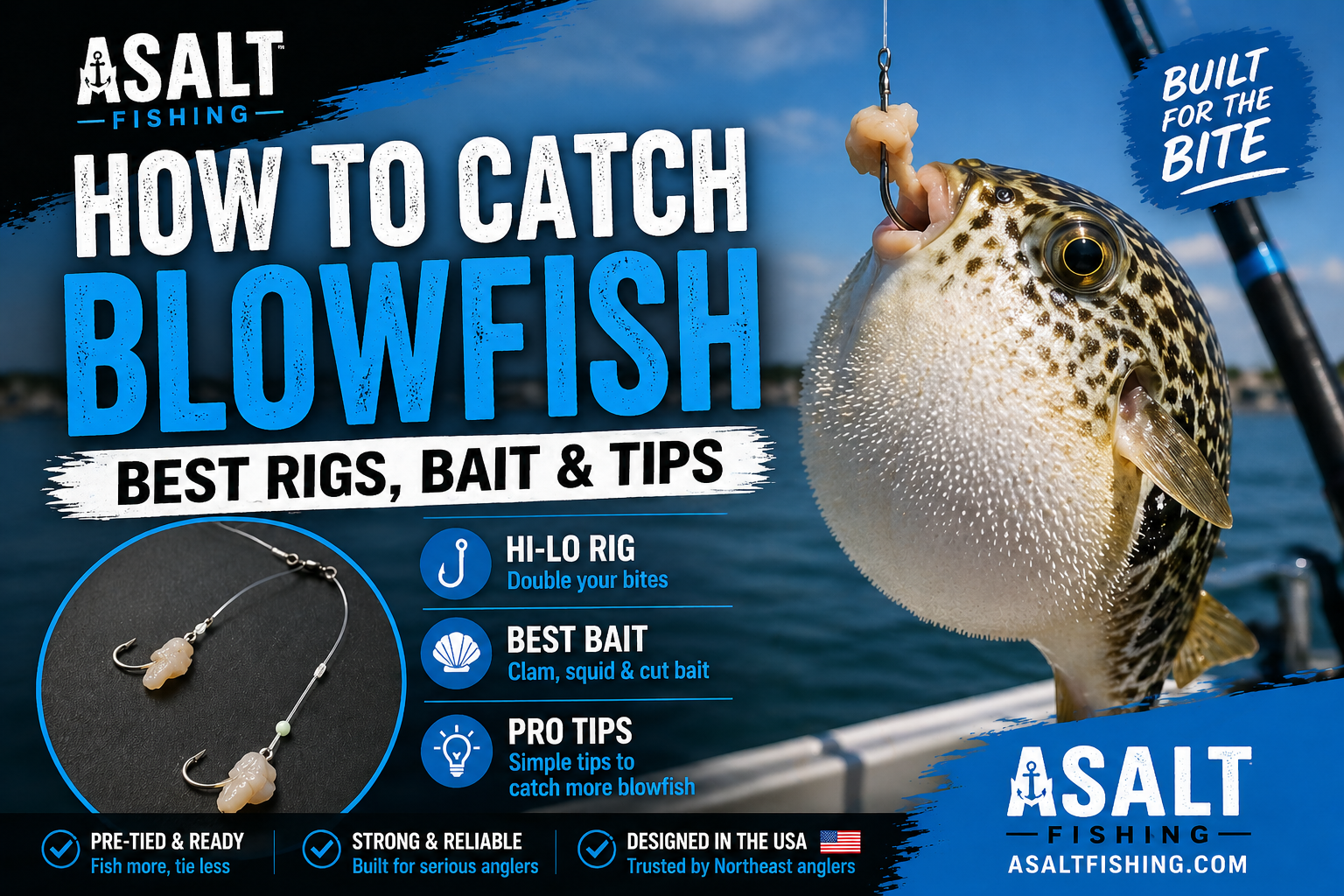
You've had a great day on the water. The hi-lo rig was working, the blowfish were biting non-stop, and now you've got a bucket full of puffers and a question: how do I actually clean these things? You're not alone. Blowfish are one of the most commonly released fish on the Northeast coast — not because they're a bad catch, but because anglers don't know what to do with them once they're on the boat.
Here's the truth: cleaning blowfish is faster and easier than filleting most other fish. Once you know the technique, you can process a full bucket in under 20 minutes. And the payoff — sweet, tender sea squab tails — is absolutely worth it.
Why Bother Cleaning Blowfish?
Most anglers who catch blowfish for the first time look at the spiny, awkward little fish and have no idea it's hiding a culinary gem. The edible part — the tail meat — is a thick, firm, boneless strip of white fish that tastes mild, slightly sweet, and extraordinarily clean. In New York seafood restaurants, it's sometimes sold as "sea squab" at a premium price.
The cleaning process is unique: you don't fillet a blowfish like you would a flounder or striper. Instead, you remove the tail section from the body entirely, leaving behind the head, organs, and skin. The result is a clean, bone-free piece of meat that's ready to cook with minimal prep. No pin bones. No fuss.
"Sea squab is the Northeast coast's best-kept secret — sweet, boneless, and ready to fry in minutes. Most people don't know what they're throwing back."
Safety: What to Know Before You Start
Northern Puffer (the blowfish found along the Northeast coast) are edible and safe when handled correctly — but only the tail muscle meat should be eaten. The skin, organs, liver, and certain internal parts of puffer fish can contain tetrodotoxin (TTX), a natural toxin. This is not a concern when you clean the fish properly and eat only the tail meat as described in this guide. Never eat any part beyond the tail section, and always wash hands and tools thoroughly after handling.
The Northern Puffer caught along the Mid-Atlantic and Northeast coast (Sphoeroides maculatus) is a different species from the highly toxic puffers found in tropical waters. The FDA and local health departments have long deemed the tail meat of properly cleaned Northeast blowfish safe for consumption. Just follow the cleaning steps carefully and stick to the tail.
Tools You'll Need
You don't need any specialized equipment. A sharp knife and a pair of kitchen shears are the two most important tools. Dull knives slow you down and increase the chance of slipping, so sharpen up before you start.
Step-by-Step: How to Fillet a Blowfish
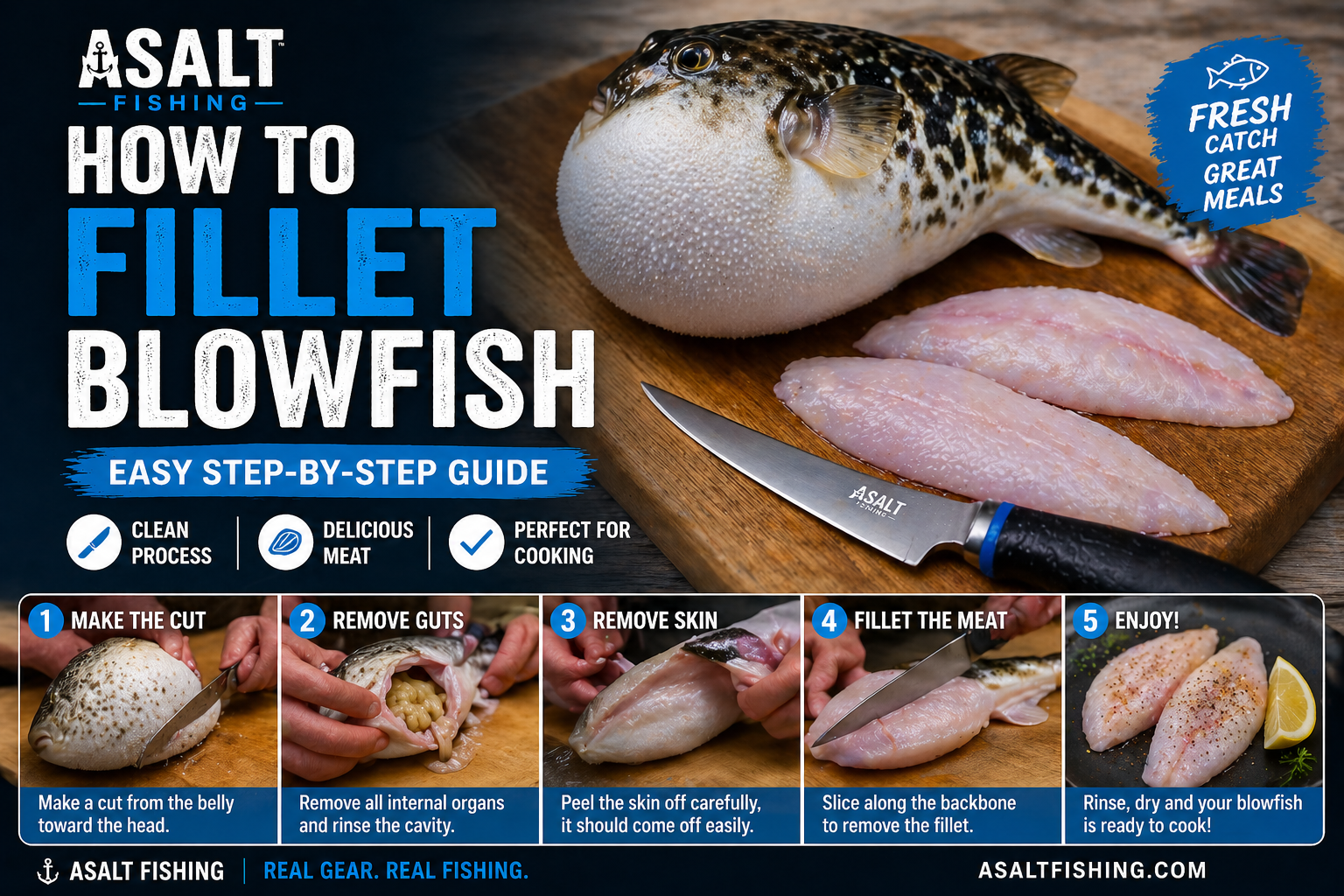
The blowfish cleaning method is unlike any other fish. You're essentially separating the tail section from the body rather than filleting a traditional fish. Here's exactly how to do it:
Rinse and Lay the Fish Flat
Give your blowfish a quick rinse under cold running water. Place it belly-down on your cutting board, tail facing away from you. If the fish has puffed up, gently press it flat. Wear your gloves — the spines on an inflated puffer are sharp.
Locate the Cut Line
You want to cut just behind the pectoral fins — the small fins just behind the head. This is roughly where the body meets the tail section. Run your finger along the fish to feel where the rounded belly transitions into a more cylindrical tail. That's your cut line.
Cut Through the Skin and Body
Using your fillet knife (or kitchen shears for speed), make a firm cut straight through the fish just behind the pectoral fins, cutting all the way through the spine. You can also use shears here: snip around the circumference of the fish just behind the head. This separates the tail section from the rest of the body. Discard the head and front body section.
Pull or Cut the Skin Off the Tail
Hold the tail section firmly. Grip the skin at the cut end and peel it back toward the tail fin — it comes off cleanly in one pull on most fish, almost like pulling off a sock. If it resists, use your knife to loosen it. Some anglers cut around the skin at the base before peeling. Remove all skin from the tail section.
Remove the Tail Fin
Once the skin is off, you'll have a clean, white tail section with the tail fin still attached. Snip or cut the tail fin off close to the meat. Discard it.
Rinse the Sea Squab Tail
Rinse the cleaned tail under cold water to remove any residue. You now have a clean, boneless blowfish tail — sometimes called a "sea squab tail" — ready to cook. The central bone runs through the tail but is easy to eat around, or can be removed after cooking.
Repeat and Ice Immediately
Blowfish are small, so you'll be cleaning many of them. Work through your catch efficiently and place cleaned tails on ice or in the refrigerator immediately. Fresh sea squab tails are best cooked the same day or within 24 hours.
Pro Tips for a Better Clean
- Chill your catch first. Cold fish are firmer and easier to handle. Keep blowfish on ice while you fish and they'll be in better shape when it's time to clean.
- Use shears for speed. Kitchen shears through the body cut is faster than a knife, especially when cleaning 30–50 fish. It saves your knife edge too.
- The skin peels easier on fresh fish. Don't let blowfish sit too long before cleaning — fresher fish peel in one smooth pull.
- Keep a separate discard bucket. Blowfish bodies and skin pile up fast. A dedicated discard bucket keeps your workspace clear and speeds up the process.
- Soak cleaned tails in salted ice water. A 15-minute soak firms up the meat, draws out any remaining blood, and keeps it pristine white before cooking.
- Don't eat the liver or organs. Stick to the tail muscle meat only. When in doubt, discard it.
How to Cook Blowfish Tails
Once you've got your sea squab tails cleaned and rinsed, you're minutes away from one of the best seafood meals on the East Coast. Here are the most popular preparations:
Classic Fried Sea Squab
This is the gold standard. Pat your tails dry, season with salt, pepper, and garlic powder, dredge in seasoned flour or breadcrumbs, and pan-fry in butter or oil over medium-high heat for 3–4 minutes per side until golden. The result is crispy on the outside, tender and sweet inside. Serve with lemon wedges and a cold beer.
Garlic Butter Sauté
For a lighter approach, melt butter in a skillet with crushed garlic and fresh parsley. Sauté blowfish tails 3–4 minutes per side until cooked through. Finish with a squeeze of lemon. Simple, clean, and lets the natural sweetness of the fish shine.
Grilled Blowfish Tails
Marinate tails in olive oil, lemon juice, garlic, and herbs for 30 minutes. Grill over medium-high heat for 3–4 minutes per side. The tail bone acts as a natural handle. Grilling adds a subtle smokiness that pairs beautifully with the mild meat.
Baked with Breadcrumbs
For an easy, low-mess option: brush tails with olive oil, coat in seasoned breadcrumbs and parmesan, and bake at 400°F for 15–18 minutes until golden and cooked through. Great for feeding a crowd after a big day on the water.
Frequently Asked Questions
Is it safe to eat blowfish caught in the Northeast?
Yes. The Northern Puffer (Sphoeroides maculatus) found along the Atlantic coast from New Jersey to Long Island is safe to eat when cleaned properly. Only consume the tail muscle meat — avoid the skin, organs, and internal parts. The FDA has considered Northeast blowfish tail meat safe for human consumption for decades.
How do you clean a blowfish quickly?
The fastest method: use kitchen shears to snip through the body just behind the pectoral fins, peel the skin off the tail in one pull, snip the tail fin, and rinse. An experienced angler can clean a blowfish in under 60 seconds once they've done a few.
What does blowfish taste like?
Blowfish tail meat is mild, slightly sweet, and has a firm but tender texture similar to monkfish or chicken breast. It's often compared to frog legs. When fried, it's considered a delicacy — which is why it's sold as "sea squab" in New York seafood restaurants.
How many blowfish do you need for a meal?
Because blowfish are small, plan on 6–10 fish per person for a full meal. They clean fast and cook quickly, so a big catch day can translate to a feast with very little time at the stove.
Can you freeze blowfish tails?
Absolutely. Cleaned sea squab tails freeze well. Pat them dry, place in a zip-lock bag with the air pressed out, and freeze for up to 3 months. Thaw overnight in the refrigerator before cooking.
Do you need a special knife to clean blowfish?
No special knife is required. A standard sharp fillet knife works perfectly. Many anglers find kitchen shears even faster for the initial body cut. The key is sharpness — a dull blade makes the process much harder.
Show Us Your Catch
Tag your blowfish haul and your sea squab spread. We love seeing what you're pulling out of the water.
Follow @asalt.fish