

Northeast Seafood Paella with Black Sea Bass, Clams & Shrimp | Asalt Fishing
Your new favorite recipe at the end of a great fishing day — black sea bass, littleneck clams, mussels, and shrimp over saffron rice with a crispy socarrat crust. Built entirely from what you can...
Northeast Seafood Paella with Black Sea Bass, Clams, Mussels & Shrimp
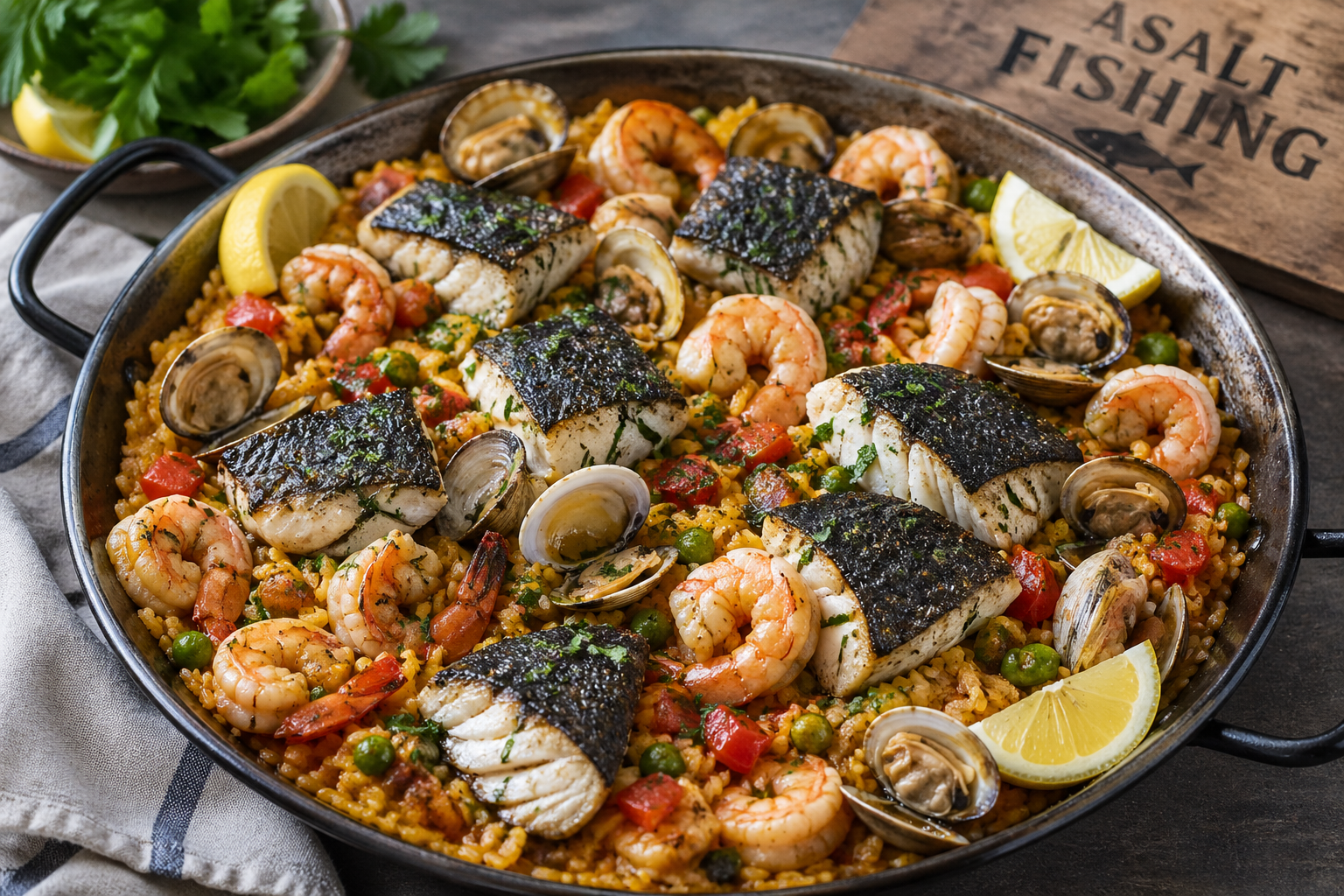
This is the recipe I make at the end of a great fishing day — when the cooler has black sea bass fillets, the bait bucket still has a few live clams, and everything smells like salt air. A Northeast seafood paella built entirely from what you can catch or pick up fresh at any Jersey Shore or Long Island dock. Spanish technique, local ingredients, unforgettable results.
Paella is not a complicated dish — but it rewards attention and patience. The magic is in two things: the sofrito (the aromatic base that carries all the flavor) and the socarrat (the crispy caramelized rice crust that forms on the bottom of the pan in the final minutes). Get those two right and everything else falls into place. This recipe is built around Northeast fish, but the technique is pure Spanish tradition.
Traditional Spanish paella uses whatever the sea gives you locally. In the Northeast, that means black sea bass — arguably the finest paella fish on the East Coast. Its firm texture holds up through the entire cook without falling apart, its mild sweetness doesn't fight the saffron and smoked paprika, and it absorbs the sofrito beautifully. Fluke, porgy, and striped bass work equally well. The clams and mussels are doing double duty: they flavor the broth as they open and become the showpiece on top of the finished pan.
Northeast Seafood Paella
Black sea bass, littleneck clams, mussels, and shrimp over saffron rice with a crispy socarrat crust
🐟 The Seafood
- 1 lbBlack sea bass fillets, skin removed, cut into 2" chunks (fluke or porgy work equally well)
- 12Littleneck clams, scrubbed clean
- 1 lbMussels, debearded and scrubbed
- ½ lbLarge shrimp (16/20 count), shell-on for flavor
- ½ lbSquid (optional — tubes sliced into rings, tentacles kept whole)
🍚 The Rice & Broth
- 2 cupsBomba or Calasparra rice (Spanish short-grain paella rice — do not substitute long-grain)
- 5 cupsSeafood stock — homemade from fish carcasses is best (see note below)
- 1 generous pinchSaffron threads (about ½ tsp), bloomed in 2 tbsp warm water for 10 minutes
- 1 tspSmoked paprika (pimentón de la Vera — essential, not regular paprika)
🧅 The Sofrito — The Heart of the Dish
- 4 tbspExtra virgin olive oil
- 1Large yellow onion, finely diced
- 1Red bell pepper, finely diced
- 1Green bell pepper, finely diced
- 6 clovesGarlic, minced
- 4Ripe Roma tomatoes, grated (or one 14 oz can crushed San Marzano tomatoes)
- ½ cupDry white wine (Albariño, Verdejo, or Sauvignon Blanc)
- 1 tspKosher salt + fresh cracked black pepper
🍋 To Finish
- 2Lemons — one for juice, one cut into wedges for serving
- ¼ cupFlat-leaf parsley, roughly chopped
- —Aioli or crusty bread for serving (optional but recommended)
🍳 Equipment
- —15"–17" paella pan or wide, shallow stainless steel skillet (a 12" cast iron works for 4 people)
- —If cooking outdoors: paella burner or grill — ideal for even heat and authentic socarrat
If you filleted your own sea bass or fluke, save every carcass, head, and collar. Simmer in 7 cups of cold water with half an onion, a celery stalk, bay leaf, and peppercorns for 35 minutes over low heat — never boiling. Strain. This homemade stock is the single biggest upgrade you can make to this recipe. The difference between paella made with your own fish stock and paella made with store-bought broth is enormous. Use the carcass.
How to Make It — Step by Step
Bloom the Saffron & Prepare Your Stock
Steep a generous pinch of saffron threads in 2 tablespoons of warm (not boiling) water for at least 10 minutes. The water will turn a deep amber-gold — this is the color and flavor compound you're extracting. Meanwhile, warm your seafood stock in a separate pot and keep it hot (not simmering — just hot). Adding cold stock to a hot paella pan drops the temperature and stops the cooking process. Always add hot stock.
Sear the Seafood — Then Set Aside
Heat your paella pan over high heat with 2 tablespoons of olive oil until shimmering. Season the sea bass chunks with salt and pepper. Sear in a single layer for 90 seconds per side until golden — do not cook through. Remove and set aside. In the same pan, quickly sear the shrimp for 60 seconds per side until pink — remove. If using squid, toss rings and tentacles in the hot pan for 60–90 seconds just until opaque — remove. The seafood will finish cooking in the rice later.
Build the Sofrito — Low and Slow
Reduce heat to medium-low. Add remaining olive oil to the pan. Add onion and both peppers and cook, stirring occasionally, for 12–15 minutes until deeply softened and beginning to caramelize — do not rush this step. Add garlic and cook 2 minutes. Add grated tomatoes and cook, stirring frequently, until the mixture darkens, loses most of its moisture, and the oil begins to separate from the solids — another 8–10 minutes. Add smoked paprika and stir for 30 seconds. Deglaze with white wine and scrape up all the browned bits.
Toast the Rice in the Sofrito
Add the rice directly to the sofrito. Stir to coat every grain with the sofrito for 2 minutes — the rice will turn slightly translucent and toast lightly. This step is critical: toasted rice holds its shape through the long cook and doesn't turn mushy. Add the bloomed saffron and its water to the hot stock and stir to combine. Pour the hot saffron stock over the rice in an even stream. Stir once to distribute everything evenly — then do not stir again.
Cook the Rice — High Then Low
Bring the stock to a vigorous boil over high heat and cook for 8–10 minutes, rotating the pan occasionally for even heat distribution. The rice will absorb most of the liquid. Reduce heat to medium-low and nestle the clams and mussels hinge-side down into the rice, pushing them partially in. Place the seared sea bass chunks and shrimp on top. Cook for another 8–10 minutes until the clams and mussels open and the rice has absorbed all the stock. Discard any shellfish that don't open.
Create the Socarrat — The Crispy Bottom Crust
This is the most prized element of authentic paella — and the step most home cooks skip out of fear. When the stock is fully absorbed and the top of the rice looks dry, increase heat to medium-high for the last 2–3 minutes. You'll hear a gentle crackling — that's the socarrat forming. To test: insert a spoon at the edge of the pan and scrape gently — you should feel and hear a slight crust. The moment you smell a very faint toasty, nutty aroma (not burning, not scorching — a pleasant caramelized smell), remove from heat immediately.
Rest, Garnish & Serve at the Table
Remove from heat and cover the pan loosely with foil or a clean kitchen towel. Rest for 5 minutes — this allows the residual steam to finish cooking the rice and lets the flavors settle. Uncover, squeeze lemon juice over the entire pan, scatter with fresh parsley, and arrange lemon wedges around the edge. Bring the pan directly to the table — paella is a communal dish meant to be served and eaten straight from the pan. Serve with aioli and crusty bread for sopping up the saffron-stained pan juices.
Northeast Fish Swap Guide — Use What You Caught
The beauty of this recipe is that it works with nearly any firm Northeast fish. Here's exactly how to swap species based on what's in your cooler:
| Fish | How to Use It | Notes |
|---|---|---|
|
Black Sea Bass ⭐ Best Choice |
2" chunks, skin-off. Sear first, add back in Step 5. | Ideal texture and flavor. Holds shape perfectly through the cook without falling apart. |
|
Fluke (Summer Flounder) ✅ Excellent |
2" chunks. Add in the last 8 minutes only — it cooks faster than sea bass. | Delicate flesh, mild and sweet. Don't overcook — add later in the process than sea bass. |
|
Porgy (Scup) ✅ Excellent |
2" chunks, skin-off. Treat identically to sea bass. | Slightly firmer than fluke with a clean, mild flavor. Underrated paella fish. |
|
Striped Bass ✅ Great |
2"–3" thick chunks. Sear well on all sides — striper is dense and needs the crust. | Richer, meatier flavor than sea bass. Works beautifully but slightly dominates the broth. |
|
Bluefish Use Fresh Only |
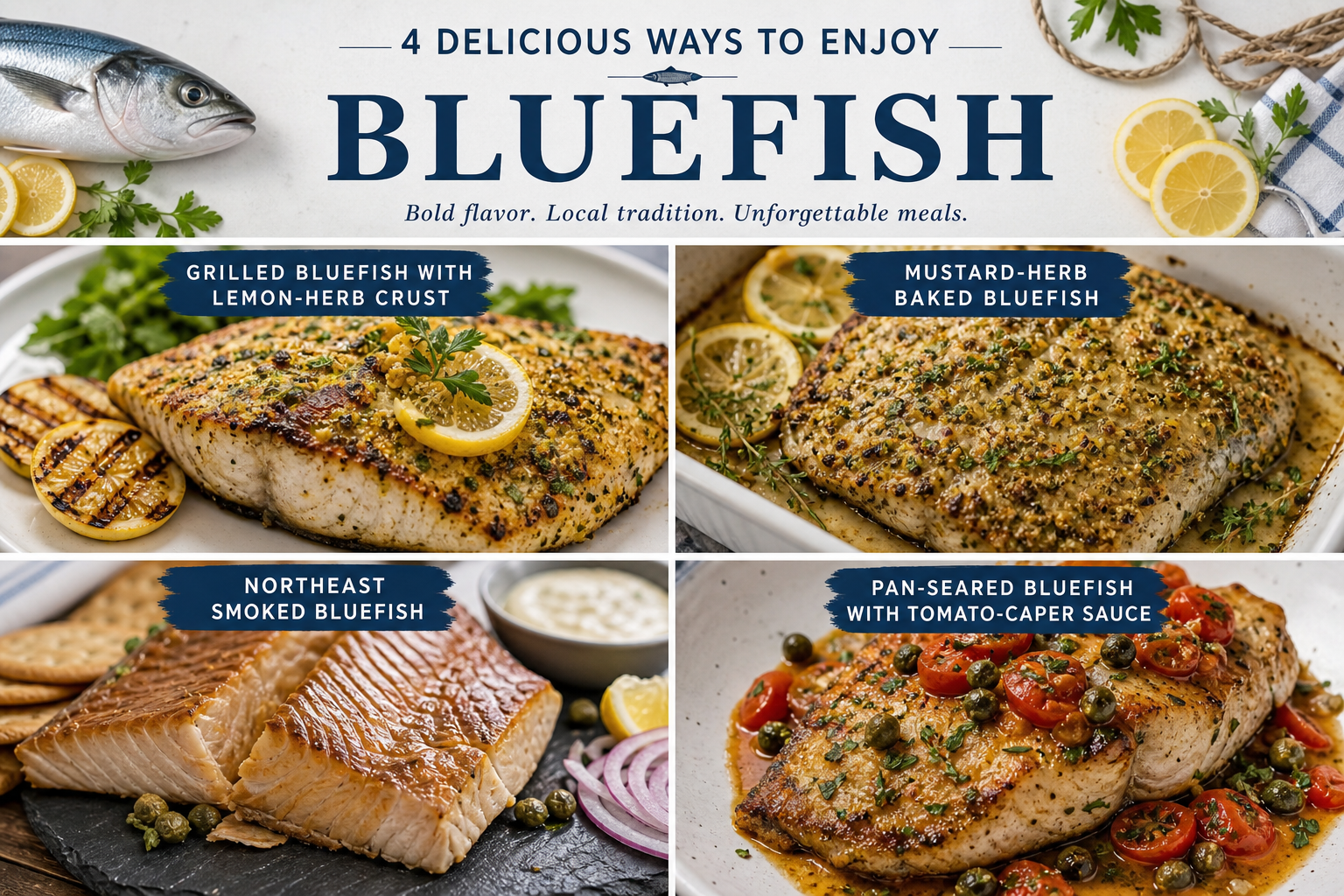
Very fresh only. Small chunks added in the last 6 minutes. No pre-searing needed. | Bold, oily flavor. Works if fish is caught-that-day fresh. Strong flavor pairs surprisingly well with saffron and smoked paprika. |
Variations
🦞 Add Lobster
Split a 1.25 lb lobster in half. Sear cut-side down 3 minutes in olive oil. Add to the pan in Step 5, meat-side up. The most indulgent Northeast paella possible — save it for special occasions.
🦑 All-Squid Version
Replace the fish with 1.5 lbs of squid (rings and tentacles). Sauté in the sofrito itself so the squid ink flavors the rice. Add 1 packet of squid ink to the broth for a dramatic black rice presentation (arroz negro).
🔥 Grilled Outdoor Paella
Cook the paella on a charcoal grill or paella burner outdoors. The wood/charcoal heat creates a more authentic, smokier socarrat and evenly heats the large pan that a home range struggles with. The outdoor version is worth the extra setup.
🌿 Simpler Weeknight Version
Use just sea bass and shrimp (skip clams and mussels). Reduce cook time slightly. Use store-bought seafood stock if you don't have carcasses. Still outstanding — just less complex. Ready in 45 minutes total.
🎣 Catch the Star Ingredient Yourself
The best paella starts with the freshest fish. Joe Castelli personally designs every Asalt Fishing rig from 50+ years on Northeast waters. Hand-tied in the USA — built so you can catch your own dinner.
1. Use Bomba or Calasparra rice — no substitutes. 2. Real saffron only. 3. Build the sofrito slowly — 20+ minutes. 4. Hot stock always. 5. Never stir after adding stock. 6. Chase the socarrat — increase heat at the end and listen for the crackle. 7. Rest 5 minutes before serving. 8. Serve from the pan at the table — always.