

How to Clean and Fillet Black Sea Bass: Step-by-Step Guide
Most anglers leave good meat on the bones. Joe Castelli's step-by-step guide shows you exactly how to clean and fillet black sea bass — from trimming those sharp dorsal spines to pulling pin bones and...
How to Clean & Fillet Black Sea Bass: Step-by-Step Guide
Black sea bass are relatively small, manageable fish that yield beautiful white, flaky fillets — but their spiny dorsal fin, tough scales, and compact body require a specific technique to maximize your meat. Follow these steps and you'll fillet a sea bass cleanly in under five minutes.
Unlike larger fish such as striped bass or bluefish, black sea bass are simple enough to process without a fillet table — a clean cutting board and a sharp knife are all you need. The reward is firm, mild, sweet white meat that's among the best-eating fish in the Northeast.
For the best flavor and food safety, keep your fish on ice immediately after catching. The sooner you fillet and refrigerate or freeze the fish after the trip, the better the quality. Never leave fish sitting in warm bilge water — this dramatically degrades the meat.
Tools You'll Need
Black sea bass have extremely sharp dorsal fin spines that can cause deep, painful puncture wounds. Always trim them with shears before handling, and use a fish grip or gloves when positioning the fish.
Step-by-Step: How to Fillet Black Sea Bass
Trim the Dorsal Fin Spines
Before doing anything else, use kitchen shears to clip the spiny dorsal fin flush against the fish's back. These spines are needle-sharp and will puncture your hand if you're not careful. Trim the anal and pelvic fins as well to give yourself clean handling. This one step makes the entire process much safer and easier.
Scale the Fish
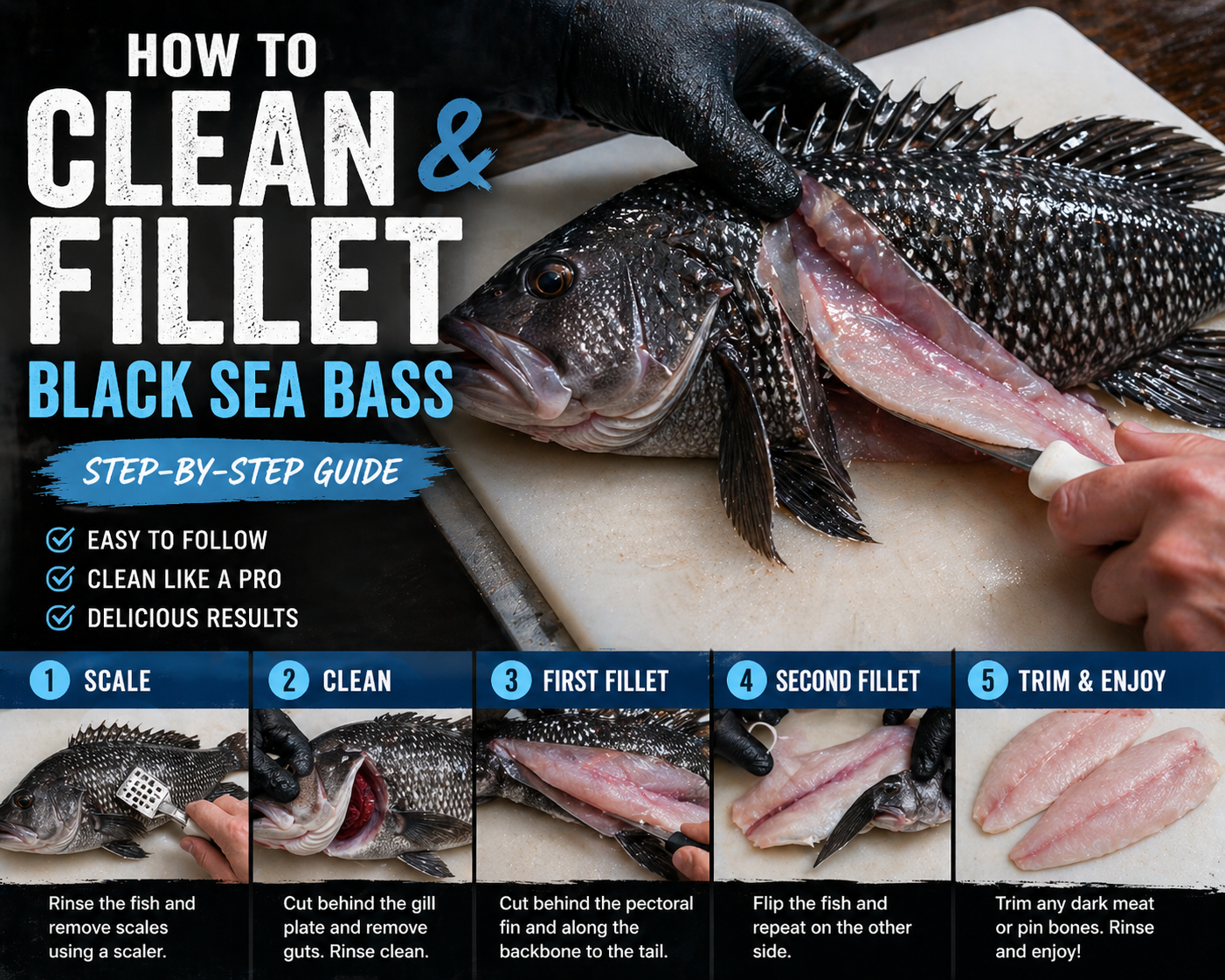
Black sea bass have moderately tough, medium-sized scales. Lay the fish flat on your cutting board, hold the tail firmly, and scrape from tail to head using the back of your fillet knife or a dedicated scaler. Use short, firm strokes and work against the grain of the scales. Scale both sides and the belly area. Rinse under cold water when done.
Make the Initial Cut Behind the Gill Plate
Lay the fish on its side with the belly facing away from you. Position your knife at a slight angle, just behind the pectoral fin and gill plate, and make a downward cut until you feel the backbone. Do not cut through the backbone — stop when you feel resistance. This is your starting point for the fillet cut.
Fillet Along the Backbone
Turn your blade flat and parallel to the cutting board, pointing toward the tail. Using long, smooth strokes — letting the knife ride the backbone — slice from your initial cut all the way to the tail. Keep the blade angled very slightly downward so it stays in contact with the bones without cutting into them. Lift the fillet flap as you go to maintain visibility and control.
Clear the Rib Cage
Once you've freed most of the fillet, you'll encounter the rib cage. Place just the tip of your knife at the base of the ribs and angle it slightly upward, pressing forward to slice through the thin membrane connecting the ribs to the fillet. Follow the curve of the rib cage until you free the entire fillet. Going slowly here recovers the most belly meat.
Remove the Skin (Optional)
Lay the fillet skin-side down. Insert the knife between the meat and skin at the tail end. Grip the small flap of skin firmly and slide the blade forward in a single smooth motion while pulling the skin toward you. The skin should separate cleanly. Many chefs prefer to cook black sea bass skin-on — the skin crisps beautifully in a hot pan and has excellent flavor.
Flip & Repeat — Then Check for Pin Bones
Flip the fish and repeat steps 3–6 on the other side. Once both fillets are off, run your fingertips down the center of each fillet lengthwise — you'll feel a thin row of pin bones. Use needle-nose pliers or fish tweezers to pull each one out, working in the direction the bone points. There are typically 8–12 pin bones in a black sea bass fillet.
Understanding the Fish: Anatomy Guide
🗺️ Parts of the Black Sea Bass Fillet
Don't Waste the Scraps — Use the Whole Fish
The head, bones, and collar of black sea bass make outstanding seafood stock. Place carcasses in a pot with cold water, half an onion, celery, bay leaf, and peppercorns. Simmer for 30–40 minutes (don't boil — it makes stock bitter), then strain. Use the stock as the base for chowder, bisque, or risotto.
The collar — the meaty section just behind the head — can be seasoned and grilled or broiled directly. It's a forgotten cut that delivers some of the most flavorful meat on the entire fish.
🎣 Asalt Fishing Sea Bass Rigs
Joe designs every rig in the Asalt Fishing lineup from 50+ years of firsthand Northeast fishing experience. These are the same rigs he uses — hand-tied and built for real conditions.
Fresh black sea bass fillets are best consumed within 2 days when refrigerated on ice. For longer storage, vacuum-seal fillets and freeze for up to 4–6 months. To freeze without a vacuum sealer, submerge fillets in water in a zip-lock bag, removing all air, and freeze flat. The water acts as a barrier against freezer burn.